
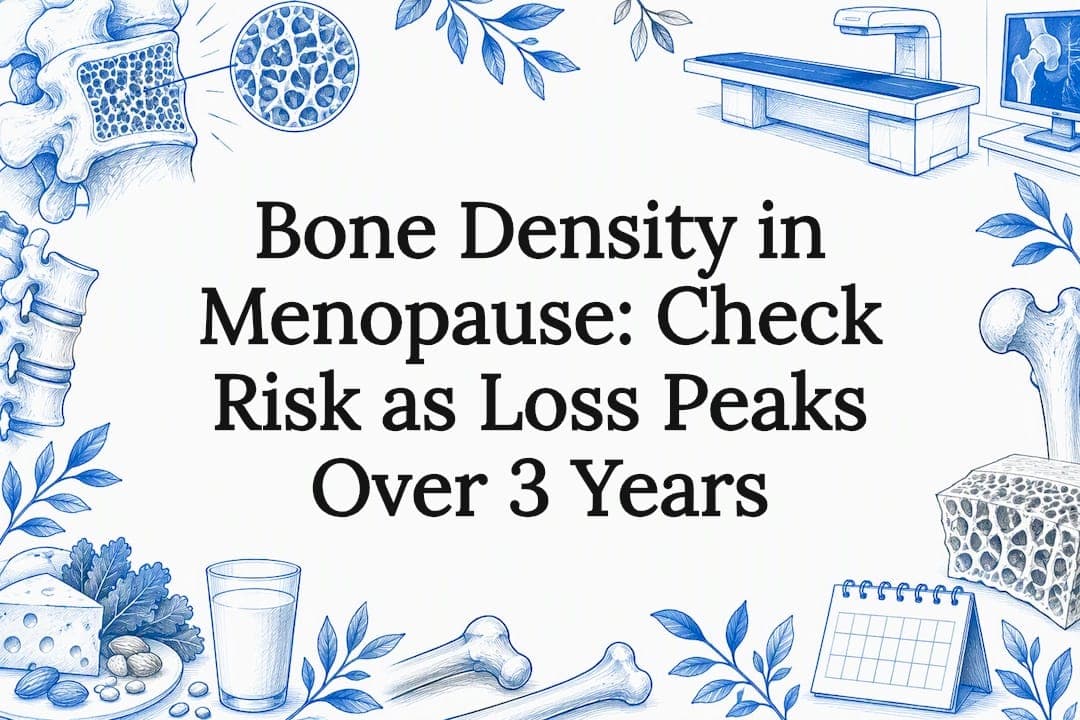
Menopause accelerates bone loss, and getting assessed early makes the difference between catching a problem and finding out too late. Dual-energy X-ray absorptiometry (DXA) is the standard way to check your bone density, and the USPSTF recommends screening for all women 65 and older, plus younger postmenopausal women with at least one risk factor. Start with a risk check, book a DXA if it applies to you, and begin resistance training while you review your calcium, vitamin D, and protein intake.
TL;DR:
- Bone loss accelerates from a year before through two years after the final menstrual period; lumbar spine density loss reaches about 10.6% over ten years.
- Earlier screening is especially relevant with low body weight, a parent’s hip fracture, prior fragility fracture, smoking, heavy alcohol use, or long term glucocorticoid treatment.
- Low risk, normal results may need retesting after 10 to 15 years; osteopenia calls for 3 to 5 years, and osteoporosis for 1 to 2.
- For diagnosed osteoporosis, bisphosphonates are often the first choice; hormone therapy mainly treats menopausal symptoms, while denosumab is an option when bisphosphonates are unsuitable.
Table of Contents
- Why menopause speeds up bone loss
- How fast and when bone loss happens
- Risk factors that increase osteoporosis and fracture risk
- When to get a bone density test
- How to protect your bones now: exercise, nutrition, and lifestyle
- Medical treatments and when they are considered
- About DXA testing and how to get an accurate bone density measurement
- If your DXA shows low bone density: interpreting results and next steps
- Role of other hormones in menopausal bone loss
- A straight-talking take on menopause and bone health
- Find and compare DXA scans without the hospital markup
- FAQ
- Sources
Why menopause speeds up bone loss
Bone is constantly being broken down and rebuilt by two cell types: osteoclasts, which resorb old bone, and osteoblasts, which build new bone. Estrogen normally keeps osteoclast activity in check, so the two processes stay roughly balanced.
When estrogen drops during the menopause transition, that brake loosens. Estrogen decline raises activity of RANK ligand, a signaling molecule that recruits and activates osteoclasts, so resorption outpaces formation and bone density falls.
A few other factors compound the effect:
- Disrupted sleep from night sweats reduces the recovery time bone and muscle need to rebuild.
- Lower activity levels, common as symptoms interfere with daily routines, remove a key stimulus for bone formation.
- Aging muscle becomes less responsive to protein and exercise, a shift sometimes called anabolic resistance, which makes maintaining bone and lean mass harder without deliberate effort.
How fast and when bone loss happens
Bone loss does not accelerate gradually across menopause. It clusters in a specific window: starting about a year before your final menstrual period and continuing for roughly two years after, a stretch researchers call the transmenopause.
Over that roughly three-year window, women lose a disproportionate share of their lifetime bone loss: cumulative lumbar spine bone mineral density loss reaches about 10.6% over a 10-year span, with femoral neck loss around 9.1%, much of it concentrated in the transmenopausal years rather than spread evenly.

Rates before this window are much slower, and they taper again in the decade after, though they never fully return to premenopausal pace. Because the steepest losses happen early and vary from person to person, getting assessed near the start of this transition, rather than waiting until symptoms or fractures appear, gives you the clearest picture of where you stand.
Risk factors that increase osteoporosis and fracture risk
Age and menopause itself raise your baseline risk, but several other factors push it higher and often determine whether screening should start before 65.
- Low body weight or a low body mass index reduces mechanical loading on bone.
- A parent's history of hip fracture signals shared genetic or skeletal risk.
- A prior fragility fracture (from a fall at standing height or less) strongly predicts future fractures.
- Smoking and heavy alcohol use both interfere with bone formation.
- Long-term glucocorticoid use and certain conditions, including rheumatoid arthritis and some thyroid disorders, accelerate bone loss.
Tools like FRAX and the Osteoporosis Self-Assessment Tool (OST) combine these factors, sometimes alongside bone density results, to estimate fracture probability and help a clinician decide whether screening or treatment is warranted. Weight, smoking, and alcohol use are modifiable; age, genetics, and fracture history are not, which is exactly why the modifiable ones deserve attention now.
When to get a bone density test
The USPSTF recommends DXA screening for all women 65 and older, and for postmenopausal women younger than 65 who have at least one risk factor for fracture based on clinical assessment. If you are approaching or past menopause with any of the risk factors above, that conversation with a clinician is worth having now rather than waiting for a birthday.

DXA measures bone density at central sites, typically the lumbar spine, femoral neck, and total hip, because these areas predict fracture risk better than peripheral sites like the wrist or heel. Results are reported as a T-score, and site choice matters because density can vary meaningfully between the spine and hip in the same person.
Follow-up intervals depend on your starting results and risk level:
- Normal bone density with low risk often means retesting in 10 to 15 years.
- Osteopenia or moderate risk typically calls for retesting every 3 to 5 years.
- Osteoporosis, prior fracture, or high risk usually means retesting every 1 to 2 years.
Our guide on bone density test guidelines covers Medicare coverage rules in more detail, and before booking, it helps to confirm the clinic scans the central sites your clinician wants checked rather than a peripheral device alone.
How to protect your bones now: exercise, nutrition, and lifestyle
The most effective combination for preserving bone during this transition pairs mechanical loading with adequate fuel.
- Do weight-bearing exercise most days: walking, jogging, or stair climbing loads bone directly.
- Add progressive resistance training two to three times a week, targeting major muscle groups with increasing weight over time.
- Include impact or balance work, such as light jumping (if appropriate for your joints) and single-leg balance drills, to build bone and reduce fall risk.
- Meet calcium targets through food first, with dairy, leafy greens, or fortified alternatives, and check your vitamin D level with your clinician since deficiency is common.
- Nudge protein intake modestly higher, since increasing dietary protein by 1 to 3% of total energy alongside resistance training helps preserve lean tissue and supports bone mineral density during menopause.
- Quit smoking and limit alcohol, both of which directly impair bone formation.
- Address vasomotor symptoms and sleep disruption with your clinician, since poor sleep undermines your ability to stay consistent with exercise.
- Reduce fall hazards at home: secure rugs, improve lighting, and add grab bars where needed.
For structured guidance on safe movement if you already have low bone density, our partner's osteoporosis exercise guidelines walk through moves that build strength without added fracture risk.
Pro Tip: Pair a modest protein increase, such as adding a serving of Greek yogurt or an extra egg, with your resistance training days rather than spreading it evenly, so muscle has the building blocks right when it needs them.
Medical treatments and when they are considered
Lifestyle steps help everyone, but some women need pharmacologic support, and the right option depends on your DXA results and fracture-risk profile.
- Menopausal hormone therapy (MHT) reduces fracture risk and is approved for preventing bone loss, but it is primarily indicated for managing menopausal symptoms rather than as first-line treatment for women who already have osteoporosis without symptoms.
- Bisphosphonates, available orally or by infusion, slow bone resorption and are often a first-choice treatment once osteoporosis is diagnosed.
- Denosumab, given by injection on a set schedule, also reduces resorption and is used when bisphosphonates are not suitable.
- Anabolic agents, including teriparatide and romosozumab, stimulate new bone formation and are typically reserved for specialists to consider in women with very high fracture risk or multiple fractures.
Every one of these decisions follows a DXA result combined with a fracture-risk evaluation and a direct conversation with your clinician, not a one-size-fits-all rule.
About DXA testing and how to get an accurate bone density measurement
DXA measures areal bone mineral density and remains the clinical standard for diagnosing osteoporosis, largely because its central-site measurements correlate closely with real-world fracture outcomes. Accuracy depends on consistent machine calibration and scanning the same central sites over time, so bringing prior DXA reports to a new appointment helps your clinician track meaningful change rather than machine-to-machine variation.
Before your scan, a few practical steps help:
- Wear light clothing without metal zippers, buttons, or underwire.
- Avoid recent barium or contrast imaging studies, which can interfere with results.
- Bring any prior DXA reports so results can be compared on the same scale.
When searching for a location, confirm the clinic uses a central-site DXA device rather than a peripheral scanner, and check that it offers the specific scan type you need, whether that is bone density alone or a combined bone and body composition appointment. Comparing verified locations and transparent cash pricing side by side, which is what Dexascans is built for, makes that confirmation straightforward before you book.
If your DXA shows low bone density: interpreting results and next steps
Your DXA report includes a T-score, which compares your bone density to that of a healthy young adult. The categories are standard: normal is above -1, osteopenia falls between -1 and -2.5, and osteoporosis is defined as -2.5 or lower. A prior fragility fracture can indicate high risk even with a less severe T-score.
If your results come back in the osteopenia or osteoporosis range, a practical next-step checklist looks like this:
- Intensify lifestyle measures: resistance training frequency, protein intake, and fall-proofing your home.
- Discuss pharmacologic therapy with your clinician if you have osteoporosis or a high calculated fracture risk.
- Ask about a specialist referral if results are severe or your risk factors are complex.
- Schedule your next DXA based on your risk category, following the intervals outlined earlier.
Tools like FRAX incorporate your BMD alongside clinical factors like age and fracture history to estimate 10-year fracture probability, which helps your clinician decide how urgently to act. Our guide on decoding your DEXA results walks through this process in more detail, and our explainer on osteopenia versus osteoporosis breaks down what each T-score range means for your next move.
Role of other hormones in menopausal bone loss
Estrogen gets most of the attention, but it is not the only hormone shifting during this transition. Progesterone declines alongside estrogen, and while its direct role in bone metabolism is less established than estrogen's, some researchers believe it may support bone formation through a separate pathway involving osteoblast activity. The evidence here is less conclusive than for estrogen, so it is best understood as a secondary contributor rather than a primary driver.
Follicle-stimulating hormone (FSH), meanwhile, rises sharply as ovarian function declines, and it is actually one of the earliest detectable hormonal shifts in the menopause transition. Some research has explored whether FSH itself, independent of estrogen, might directly stimulate osteoclast activity, which would mean rising FSH contributes to bone loss even before estrogen drops significantly. This remains an active area of study, and the mechanism is not as firmly established as the estrogen and RANK ligand pathway.
What this means practically: the hormonal shifts of menopause are not a single switch flipping but a cascade of changes, several of which may affect bone at once. That is part of why the transmenopausal window sees such concentrated bone loss, and it reinforces why getting a baseline DXA around this time, rather than relying on assumptions about estrogen alone, gives you the clearest signal of where your bones actually stand.
A straight-talking take on menopause and bone health
The biggest mistake I see is treating bone loss as something to worry about later, once a fracture or a doctor's warning forces the issue. By the time symptoms show up, the steepest part of the decline has usually already passed. The transmenopausal window is a narrow, specific opportunity, not a vague "someday" problem.
The good news: a risk check and, if indicated, a single DXA appointment give you more clarity in one visit than years of guessing. Start there.
— Erik
Find and compare DXA scans without the hospital markup
Once you know a DXA makes sense for you, the next hurdle is usually logistics: which clinic, what it costs, and whether it scans the sites your clinician wants. We built Dexascans to solve exactly that, with over 511 verified locations across 48 states and transparent cash pricing that typically runs well below hospital rates, no referral required.
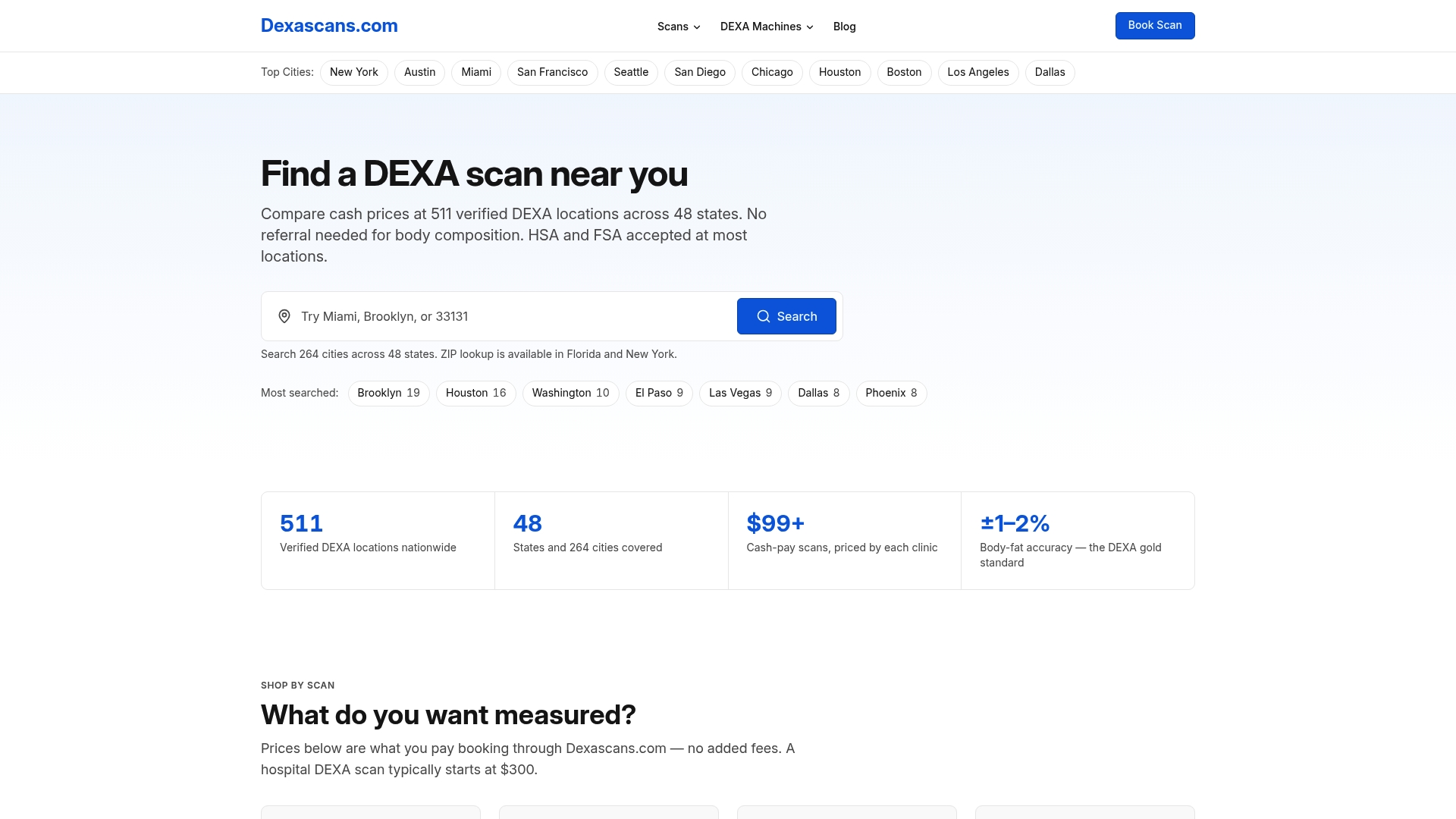
- Search by city or ZIP to see verified clinics near you.
- Compare cash prices and confirm which scan type each location offers, including combined bone density and body composition appointments.
- Book directly once you find a match for your needs and budget.
Start with our bone density test page to compare locations and pricing before you book.
This article is general information, not a substitute for advice from a qualified doctor. Consult a qualified healthcare professional about your own circumstances before acting on anything here.
FAQ
How long do post-menopausal symptoms last?
Vasomotor symptoms like hot flashes and night sweats persist for a median of 7.4 years, with symptoms typically continuing about 4.5 years past your final menstrual period.
How to adjust to menopause?
Adjusting well usually means addressing sleep, exercise, and nutrition together, since symptoms like night sweats can undermine the consistency needed for bone and muscle health. Many women also find it helpful to get a baseline risk assessment and DXA scan early in the transition rather than waiting for symptoms to resolve on their own.
What are the causes of weight gain after menopause?
Weight gain after menopause relates to declining estrogen, reduced muscle mass, and slower metabolism, often compounded by lower activity levels as symptoms interfere with exercise routines. Addressing protein intake and resistance training can help offset the lean tissue loss that drives much of this shift.
What are the different stages of menopause?
Menopause is typically described in stages: perimenopause (the transition years before periods stop, including the transmenopause window of accelerated bone loss), menopause itself (officially marked a year after your final period), and postmenopause (the years afterward). Bone loss is steepest during the transmenopause, roughly one year before to two years after your final menstrual period.
When should I get a bone density test if I'm under 65?
The USPSTF recommends screening before 65 for postmenopausal women with at least one risk factor, such as low body weight, a parental hip fracture history, smoking, or long-term glucocorticoid use. A clinician can help assess whether your specific risk factors warrant earlier testing.
Sources
- United States Preventive Services Task Force recommendation: Osteoporosis screening
- Study on bone loss timing around menopause
- Clinical overview: prevention and treatment of osteoporosis in postmenopausal women (NCBI Bookshelf, 2026)