
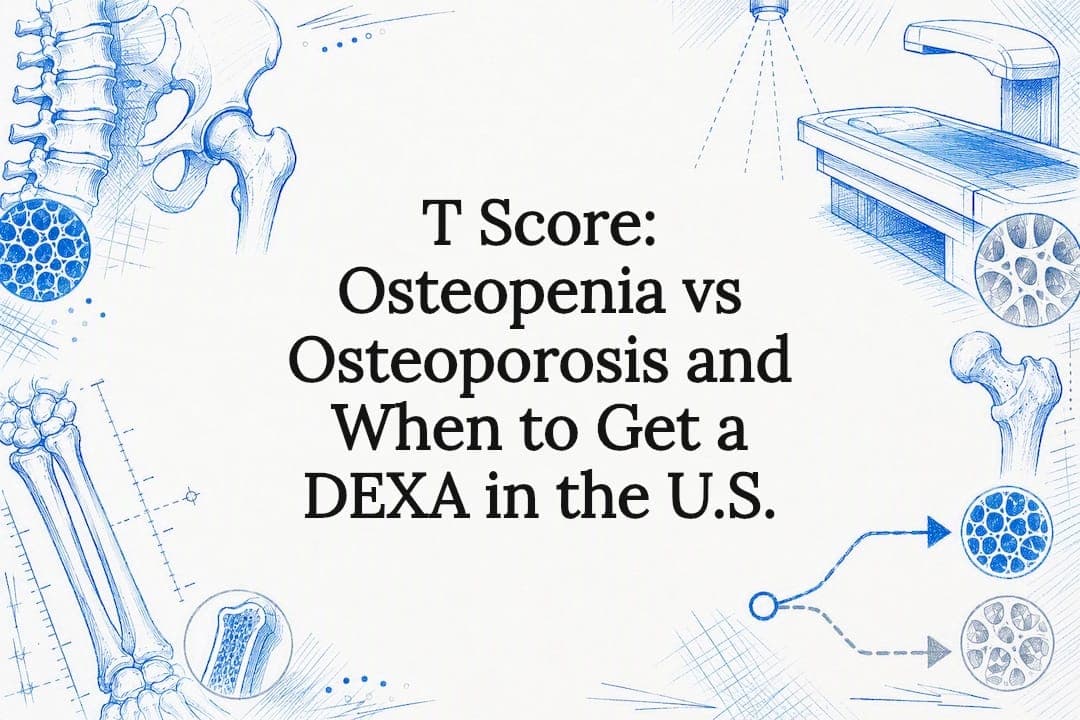
Osteopenia means your bone density sits below normal but hasn't dropped into the danger zone: a T-score between -1.0 and -2.5. Osteoporosis means it has, either a T-score of -2.5 or lower, or a fragility fracture regardless of the number. If you're over 65, postmenopausal with risk factors, or have already broken a bone from a minor fall, the next move is a DEXA scan or a direct conversation with your doctor about one.
TL;DR:
- A T-score between -1.0 and -2.5 indicates osteopenia, which often causes no symptoms and is usually detected through screening or fracture incidents.
- The diagnosis relies on DEXA scans measuring bone mineral density at the spine and hip, with the lowest score guiding treatment decisions.
- Lifestyle modifications like weight-bearing exercise, adequate calcium and vitamin D intake, and fall prevention are primary for all low bone mass cases; medication is reserved for high-risk osteoporosis.
- Over half of fragility fractures happen in people with osteopenia, making early detection and intervention crucial to prevent severe outcomes.
- Men with fractures, family history, or long-term steroid use should seek assessment despite the lack of universal screening guidelines for males.
Table of Contents
- Osteopenia vs Osteoporosis: The T-Score Thresholds That Define Them
- How Is Osteopenia or Osteoporosis Diagnosed?
- Who Should Get Screened for Low Bone Mass?
- Why Osteopenia Often Has No Warning Signs
- What Actually Treats Osteopenia and Osteoporosis?
- How Often Should You Repeat a DEXA Scan?
- Getting Past the Fear Factor in a Bone Density Diagnosis
- How to Get a DEXA Scan and Compare Local Pricing
- Sources
- FAQ
Osteopenia vs Osteoporosis: The T-Score Thresholds That Define Them
The World Health Organization built the diagnostic system around a single number: the T-score. It compares your bone mineral density to that of a healthy 30-year-old adult of the same sex, the age at which bone mass typically peaks. A T-score of 0 means you match that peak exactly. Each full point below zero represents one standard deviation of bone loss.
The categories break down this way:
- Normal: T-score of -1.0 or higher
- Osteopenia (low bone mass): T-score between -1.0 and -2.5
- Osteoporosis: T-score of -2.5 or lower
- Severe osteoporosis: T-score of -2.5 or lower plus a documented fragility fracture
That's the whole scale. There's no separate "mild" or "moderate" bone loss category in clinical use, and for good reason. The International Society for Clinical Densitometry specifically advises against subjective labels like "mild osteopenia," pushing clinicians toward the raw numeric score instead, because vague adjectives get interpreted differently by different doctors. A T-score is also not the same as a Z-score, which compares you to people your own age rather than to peak bone mass. Z-scores matter more for younger patients or unusual cases, but the T-score is what drives the osteopenia versus osteoporosis diagnosis in adults over 50.
How Is Osteopenia or Osteoporosis Diagnosed?
Dual-energy X-ray absorptiometry, known as DEXA or DXA, is the diagnostic standard. It uses two low-dose X-ray beams to measure how much bone mineral sits in a given area, and it does this with a level of precision that blood tests or standard X-rays can't match. The scan prioritizes the lumbar spine and the hip, since those sites carry the highest fracture consequences. When a hip or spine reading isn't usable, technicians sometimes measure the forearm instead.
Results come back as a T-score for each site scanned, and it's common for the hip and spine numbers to differ. Clinicians generally use whichever site shows the lower score to guide the diagnosis, since that reflects your weakest point.
A T-score alone doesn't tell the whole story, though. That's where the FRAX tool comes in. FRAX combines your bone density reading with clinical variables, including age, sex, weight, smoking status, steroid use, and family fracture history, to estimate your 10-year probability of a major fracture. Two people with an identical T-score of -2.0 can land in very different treatment categories once FRAX factors in their age and history.

One diagnostic shortcut worth knowing: if you break a hip, spine, or wrist from a fall that shouldn't have caused a fracture, that event alone qualifies as osteoporosis. The T-score becomes almost secondary at that point. The fracture itself is the diagnosis.
Who Should Get Screened for Low Bone Mass?
Certain risk factors you can't change, and others you have real control over.
Nonmodifiable risk factors:
- Age past 50, with risk climbing sharply after 65
- Female sex, particularly post menopause
- Family history of hip fracture or osteoporosis
- A previous fragility fracture
- Early menopause or surgical removal of the ovaries
Modifiable risk factors:
- Low dietary calcium and vitamin D
- Sedentary habits, especially lack of weight-bearing activity
- Smoking
- Heavy alcohol use
- Long-term corticosteroid use for conditions like asthma or lupus
Screening guidance in the United States comes from the U.S. Preventive Services Task Force, which recommends routine DEXA screening for all women age 65 and older, along with younger postmenopausal women who carry elevated fracture risk. Men don't get a standardized universal recommendation. That gap doesn't mean men are immune. Bone loss in men tends to progress more slowly until later life, when the rate closes in on women's, but by then the damage is often already underway. If you're a man with a broken bone from a low-impact injury, a family history, or long-term steroid use, raise the topic with your doctor rather than waiting for a guideline to catch up.
Why Osteopenia Often Has No Warning Signs
Low bone mass doesn't hurt. There's no ache, no stiffness, no early tell that would send you looking for answers. Most people find out they have osteopenia only because a screening DEXA turned it up, or because they've already broken something.
That second scenario is more common than most people assume. More than half of all fragility fractures happen in people whose bone density technically falls in the osteopenia range rather than the osteoporosis range, not below it. A hip fracture typically announces itself with sudden, severe pain and an inability to bear weight. A vertebral compression fracture can be quieter: gradual height loss, a stooped posture, or persistent back pain that gets written off as ordinary aging. Left unaddressed, these fractures compound. Mobility drops, the risk of the next fracture climbs, and chronic pain becomes the new baseline.

What Actually Treats Osteopenia and Osteoporosis?
Lifestyle changes matter at every stage, but medication decisions split sharply between the two diagnoses.
Start with what applies to nearly everyone with low bone mass:
- Weight-bearing and resistance exercise. Walking, stair climbing, and strength training signal your body to maintain bone density; a sedentary lifestyle accelerates the opposite.
- Calcium and vitamin D intake. Diet is the first choice; supplements fill the gap when food intake falls short.
- Smoking cessation and reduced alcohol intake. Both directly interfere with bone remodeling.
- Fall prevention. Clearing home hazards, improving lighting, and addressing balance issues prevents the fracture, not just the bone loss.
The evidence on lifestyle changes is genuinely encouraging: adequate calcium and vitamin D intake produces modest bone density gains, and several trials tie those small gains to meaningfully lower fracture rates in older postmenopausal women, especially when paired with exercise.
Medication enters the picture when you're diagnosed with osteoporosis outright, when your FRAX score crosses a high risk threshold despite an osteopenia-range T-score, or after a fragility fracture. Bisphosphonates are the usual first-line option. Denosumab works differently and suits patients who can't tolerate bisphosphonates. Anabolic agents and romosozumab actively build new bone rather than just slowing loss, and doctors typically reserve them for severe cases or very high fracture risk. Each class carries its own trade-offs around dosing schedule, infusion versus injection versus pill, and rare but serious side effects.
Pro Tip: Before starting any osteoporosis medication, ask your doctor about the expected treatment duration and the monitoring schedule. Some drugs, like bisphosphonates, are typically used for a set number of years and then reassessed, rather than continued indefinitely.
How Often Should You Repeat a DEXA Scan?
Once you start treatment, doctors generally repeat a DEXA scan after one to two years to check whether the therapy is working. Stable patients not on medication can often stretch that interval longer.
Interpreting the follow-up scan takes some nuance. DEXA machines carry a margin of measurement error, so a small shift in your number might just be statistical noise rather than real bone change. Clinicians use a calculation called the least significant change to decide whether a difference between scans reflects an actual trend. The encouraging part: with consistent treatment and fall prevention, fracture risk drops meaningfully over time, even in patients who started with a low T-score.
Getting Past the Fear Factor in a Bone Density Diagnosis
Low bone mass is common, not catastrophic, and most people manage it well once they know their number. The real work is shared decision making with your doctor and a test that actually tells you where you stand.
— Erik
How to Get a DEXA Scan and Compare Local Pricing
If you've read this far and decided testing makes sense for you, the next question is usually practical: where, and for how much. Hospital-based DEXA scans often carry inflated pricing tied to insurance billing codes, and many people delay testing simply because they don't know a self-pay option even exists.
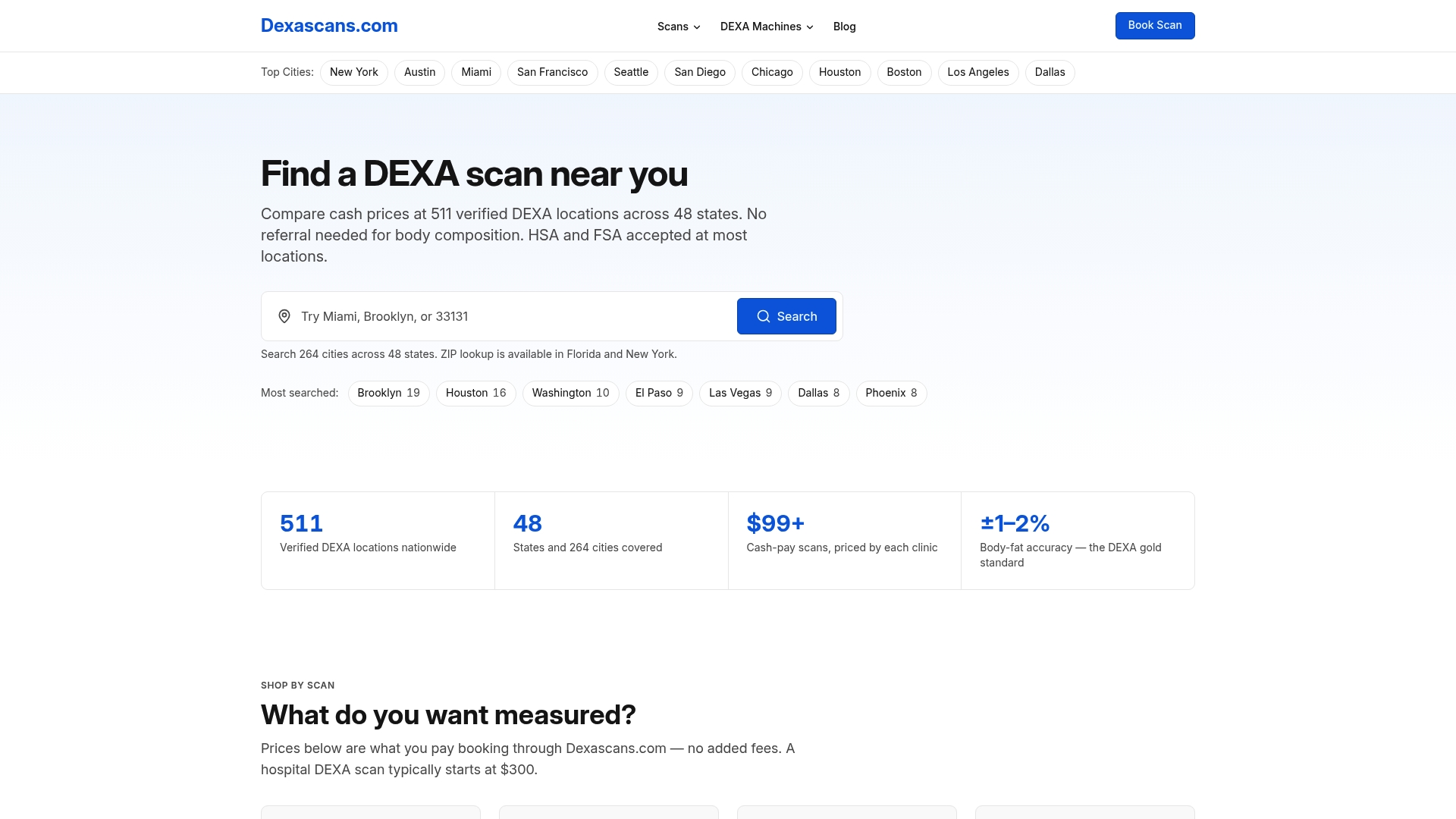
A platform lists DEXA locations across the United States, with cash pricing shown upfront instead of buried behind an insurance negotiation. You can search by city or ZIP code, compare clinics side by side, and book directly, no physician referral required. Every listed clinic has been checked for real-time availability, and results measure bone mineral density with the same precision standard used in clinical practice. If you fall into a USPSTF screening category, have risk factors worth investigating, or simply want a baseline number to track over time, search DEXA scan locations near you and compare what's available before booking.
This article is general information, not a substitute for advice from a qualified doctor. Consult a qualified healthcare professional about your own circumstances before acting on anything here.
Sources
- Screening for osteoporosis to prevent fractures — USPSTF (scholars.uthscsa)
- Overview: Osteoporosis and bone fractures - NCBI Bookshelf
FAQ
What Is the Best Treatment for Osteopenia?
For most people, the best treatment is exercise, adequate calcium and vitamin D, and quitting smoking, not medication. Osteoporosis drugs are typically reserved for patients whose FRAX score or fracture history pushes them into higher risk territory, even at an osteopenia-level T-score.
Does Walking Improve Osteopenia?
Walking is a weight-bearing activity that helps maintain bone density, particularly when combined with resistance training. It won't reverse significant bone loss on its own, but it's one of the lowest-effort habits that measurably supports bone health over time.
What Is the Best Drink for Osteopenia?
There's no single "best" drink, but fortified milk, fortified plant milks, and calcium-rich beverages support the calcium and vitamin D intake tied to better bone density outcomes. Limiting alcohol and excessive caffeine matters just as much as what you add.
What Activities Should Be Avoided With Osteopenia?
High-impact activities that carry a real fall risk, like downhill skiing or contact sports, deserve caution, especially if your balance is already compromised. Beyond that, avoid a sedentary lifestyle. Inactivity does more long-term damage than most moderate exercise ever will.
Can Osteopenia Turn Into Osteoporosis?
Yes, osteopenia can progress to osteoporosis if bone loss continues untreated, particularly around menopause when bone density drops fastest. Regular monitoring and early lifestyle changes are what typically slow or stop that progression.