
BMI is a height-to-weight index, while a DEXA scan directly measures fat, lean mass and bone. The American Medical Association says BMI should be paired with other measures, and DEXA body-fat readings can provide a more detailed picture of body composition. A scan costs more, but many clinics offer one.
TL;DR:
- A BMI of 30 or higher usually signals excess fat, but a lower score can miss it; waist measurements detect more cases.
- A whole body scan reports fat, limb muscle, regional fat, and visceral fat; bone density and T scores are included only with a bone scan.
- A scan is worth considering for athletes, regular lifters, people taking medication that changes body composition, or when BMI conflicts with your health picture.
- Repeat body composition scans after 8–12 weeks, using the same scanner, protocol, and software, with steady hydration and no hard exercise beforehand.
- Before booking, pregnant people should consult a healthcare professional, and everyone should confirm the scanner can accommodate their body size and check the scan type.
Table of Contents
- What BMI measures and where it falls short
- What a DEXA scan measures and how it works
- Why BMI and DEXA give different body-fat numbers
- When a DEXA scan is worth the cost and when BMI is enough
- How to interpret divergent results and what to do next
- Use BMI to screen and DEXA to decide
- Where we help you find and compare DEXA scans
- FAQ
- Sources
What BMI measures and where it falls short
BMI divides your weight by your height squared. That simplicity is its strength: anyone can calculate it easily, and doctors, insurers and researchers have collected it for decades, which makes it handy for tracking whole populations.
The problem shows up when you apply it to one person. BMI cannot tell muscle from fat, so a lean, muscular athlete and a sedentary person of the same height and weight get the same number. CDC and AMA guidance describes it as a simple screening tool that also varies in meaning by age, sex and race.
Large-sample work backs this up. One analysis of the general adult population found that BMI has good specificity but poor sensitivity compared with DEXA, meaning a BMI of 30 or higher usually signals excess fat, but a lower number can still hide it.
- Good for: quick first screening and population-level tracking.
- Weak for: people with a lot of muscle, older adults who have lost muscle, and anyone with an atypical build.
- Usually enough when: you just want a rough starting point and nothing hinges on the exact number.
What a DEXA scan measures and how it works
DEXA stands for dual-energy X-ray absorptiometry. It sends two low-energy X-ray beams through your body and uses the way tissues absorb them to separate bone mineral, lean mass and fat mass. You lie still on a table for a few minutes while the arm passes over you. A whole-body scan gives composition data, while a site-specific scan can be used to assess bone density. Our body composition scan guide explains what each appointment includes.
A typical composition report can include:
- Percent body fat and fat mass index (FMI)
- Appendicular lean mass index (ALMI), a measure of limb muscle
- Android and gynoid fat ratios, which show where fat sits
- A visceral fat estimate
- Bone mineral density and T-scores, when a bone scan is included
The radiology literature describes the procedure as fast and minimally invasive, with a radiation dose of about 0.001 mSv, which makes repeat scans practical. We cover how that compares with other imaging in our DEXA radiation explainer.
Reproducibility depends on protocol: Research comparing the Nana and NHANES positioning protocols found excellent agreement for whole-body measures but a systematic bias between them, so the two should not be swapped for the same person. When a clinic applies one protocol consistently, results are more comparable over time, as we explain in our DEXA accuracy article.
Why BMI and DEXA give different body-fat numbers

BMI is a calculated index. DEXA measures compartments directly. When they disagree, the index is usually the one missing something: the same large analysis found BMI misclassifies many people depending on age and sex. Waist-based measures help too, since NHANES analyses show they are more sensitive than BMI for detecting excess adiposity as DEXA defines it.
Not every gap is BMI's fault. Several factors can nudge a DEXA result:
- Positioning protocol: the Nana and NHANES setups produce systematically different numbers.
- Device and software: vendors and analysis versions differ, as the updated DXA practice guideline notes.
- Hydration: hydration status affects lean-mass estimates.
- Recent exercise or meals: these can shift soft-tissue readings on the day.
- Body size: ask the clinic whether its scanner can accommodate your body size.
Pro Tip: Ask the clinic which positioning protocol and analysis software it uses, then scan under the same conditions every time.
When a DEXA scan is worth the cost and when BMI is enough
If you are checking bone health, a DEXA scan can provide bone-density information and T-scores, while BMI does not measure bone.
For body composition, a scan earns its price when the decision depends on the details:
- You are an athlete or lift regularly, and BMI likely misreads your muscle.
- You take a medication that changes weight or body composition.
- Your BMI and your health picture don't seem to match.
- You want to track small changes over weeks, not just scale weight.
BMI plus a waist measurement is plenty for an initial screen or for public-health monitoring, where cost and speed matter more than precision.
A few practical limits apply. If you are pregnant or have questions about scan suitability, consult your healthcare professional before booking. Ask the clinic whether its scanner can accommodate your body size. If you have had other imaging recently, ask the clinic how to schedule around it.
How to interpret divergent results and what to do next
Start by comparing the two on the same footing. A BMI in the "normal" range paired with a high DEXA body-fat percentage is a reclassification: it suggests the BMI category understated your adiposity, which can change how a clinician reads your risk. The reverse, a high BMI with a modest body-fat percentage, often points to muscle mass.
Before drawing conclusions, run through this checklist:
- Confirm the scan protocol and software used.
- Repeat under the same conditions: fasted, no intense exercise beforehand, steady hydration, as practitioner research advises.
- Look at regional fat, including the visceral estimate, and at lean mass, not only the headline percentage.
- Bring the clinical context, such as medications and training, to your clinician or trainer.
For cadence, our DEXA timing guide suggests 8–12 weeks for body-composition changes, since smaller gaps may only capture measurement noise.
Pro Tip: Book follow-ups with the same scanner and protocol so technical variability doesn't masquerade as progress.
Use BMI to screen and DEXA to decide
I treat BMI as a smoke detector: cheap, fast and fine for flagging that something may need a look. It was never built to describe one person's body. When a real decision rides on your fat, muscle or bone, I would rather see a DEXA scan, run the same way each time. Consistent conditions matter as much as the machine, because clean data is what lets a clinician or coach act with confidence.
— Erik
Where we help you find and compare DEXA scans
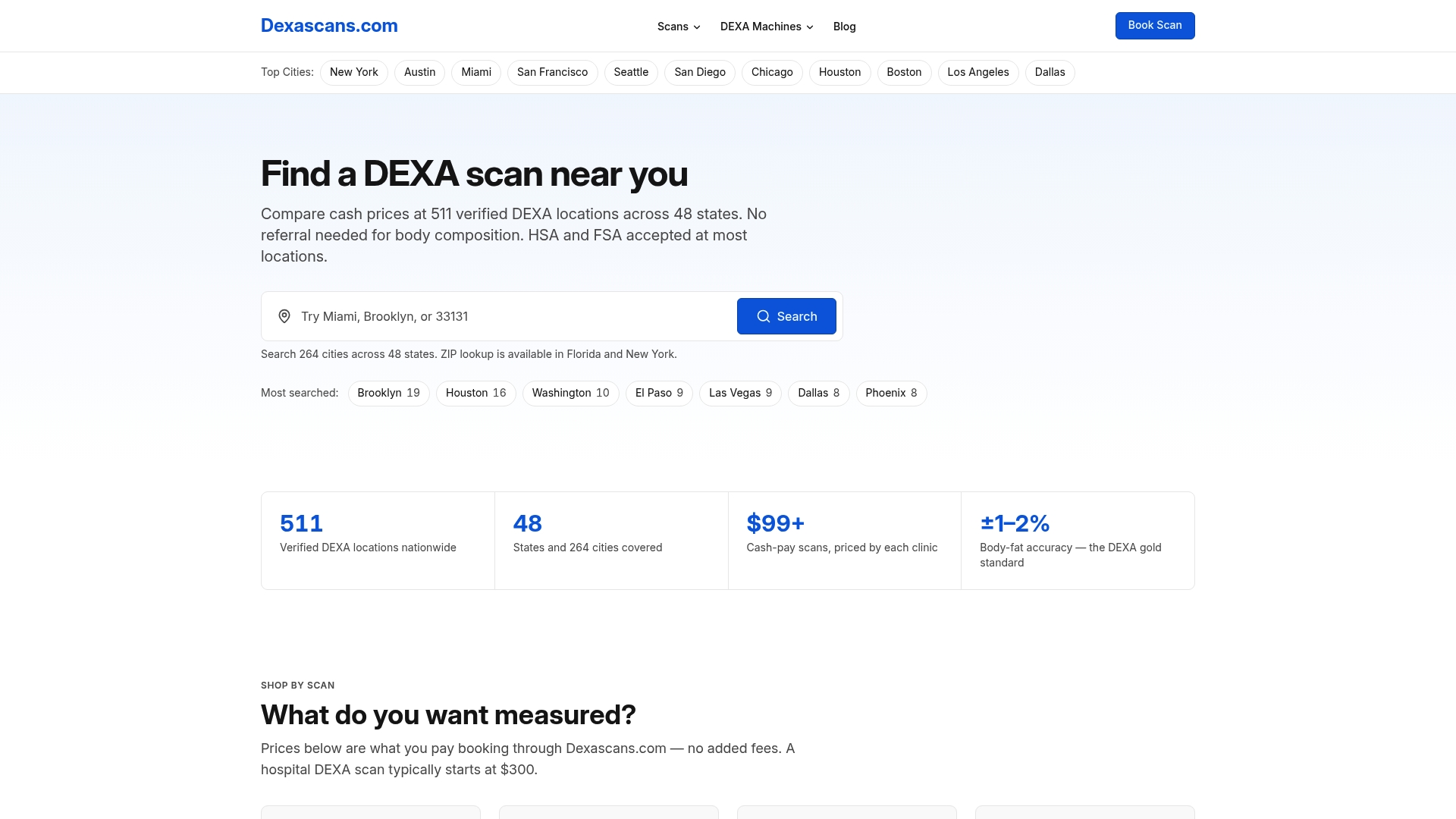
Booking a scan shouldn't mean guessing at prices or getting a surprise hospital bill. On our locations page, you can browse verified clinics, compare cash prices and check whether you can book without a referral. Before you schedule, check:
- Whether the appointment is whole-body composition, bone-only or a combined scan
- Which positioning protocol and software the clinic uses
- The table weight limit
- How the cash prices compare across nearby listings
Compare a few options first, then pick the clinic you can return to for every follow-up.
This article is general information, not a substitute for advice from a qualified doctor. Consult a qualified healthcare professional about your own circumstances before acting on anything here.
FAQ
What is the difference between BMI and body fat percentage?
BMI is a ratio of weight to height squared and cannot separate fat from muscle. Body fat percentage shows how much of your weight is fat, and DEXA measures it directly.
Are DEXA scans accurate for body fat percentage?
Yes, when run consistently. A standardized protocol, steady hydration and no hard exercise beforehand keep results reproducible, and protocol research shows excellent whole-body agreement within a protocol.
Is 20% body fat realistic?
It depends on your age, sex and training, and what counts as healthy varies. A DEXA report gives your actual percentage along with where the fat sits, which is more useful than a single target number.
What should I check before booking a DEXA scan?
Confirm the scan type, the positioning protocol and the weight limit. Our cost and booking guide walks through each.
Sources
- Accuracy of body mass index in diagnosing obesity in the adult general population - PubMed
- Diagnostic Performance of BMI and Waist Circumference in Detecting Excess Adiposity - PubMed