

For the most accurate visceral fat measurement, MRI or CT remain the gold standards, but DEXA offers a validated, low-radiation alternative that's far more practical for repeat testing. Waist circumference works as a quick screen, and consumer body-fat scales are too unreliable to trust for visceral fat specifically. If you want a medically precise one-time baseline, ask about MRI or CT; if you want an accessible test you can repeat every few months, book a DEXA scan.
TL;DR:
- Waist circumference above 35 inches for women and 40 inches for men indicates increased cardiometabolic risk but does not precisely measure visceral fat.
- MRI and CT scans provide the most accurate visceral fat measurements, with MRI preferred for repeat testing due to its lack of radiation.
- DEXA scans estimate visceral fat effectively, have high correlation with CT measurements, and are suitable for monitoring over months at a lower cost and risk.
- Consumer BIA devices cannot reliably track visceral fat and should only be used to observe trends, not for diagnosis or precise assessment.
- Consistent, repeat DEXA testing every three to six months offers the best insight into visceral fat changes over time.
Table of Contents
- How Do You Measure Visceral Fat at Home?
- Why Are CT and MRI the Gold Standard for Visceral Fat?
- How Does a DEXA Scan Measure Visceral Fat?
- Can Smart Scales and BIA Devices Track Visceral Fat?
- What Do Visceral Fat Numbers Actually Mean?
- How Do You Choose and Book the Right Visceral Fat Test?
- Why Dexascans Is Built Around DEXA for Visceral Fat Tracking
- The Real Problem With How People Track Visceral Fat
- Book a DEXA Scan Through Dexascans
- Sources
- FAQ
How Do You Measure Visceral Fat at Home?
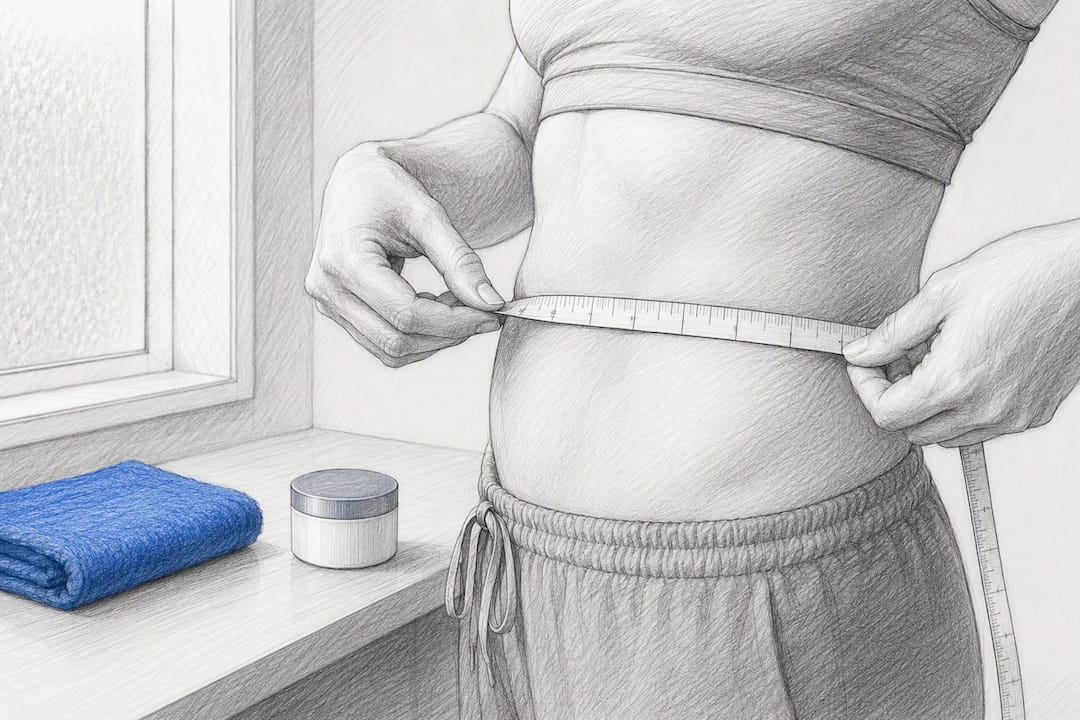
Waist circumference is the fastest visceral fat measurement you can do yourself, and it takes about 30 seconds with a soft tape measure. It won't tell you your actual visceral adipose tissue area, but it flags who should get a real scan.
Stand relaxed, breathe out normally, and wrap the tape around your body at the midpoint between the bottom of your ribcage and the top of your hip bone, roughly level with your belly button for most people. Keep the tape snug but not compressing skin, and take the reading right after you exhale, not while holding your breath. Measure twice and average the two numbers, since a single reading can be off by half an inch depending on posture.
The commonly used screening cutoffs are a waist circumference above typical clinical reference points for women and men, thresholds tied to increased metabolic risk in population studies. These numbers are proxies, not visceral fat readings. Two people with identical waist measurements can have very different amounts of actual visceral adipose tissue, because waist circumference also reflects subcutaneous fat, muscle mass, bone structure, and even how tall someone is.
Waist-to-hip ratio adds a little more nuance by comparing waist size to hip size, which helps distinguish "apple" fat distribution from "pear" fat distribution. A ratio above 0.85 in women or 0.90 in men generally signals more central fat storage, but like waist circumference alone, it still can't separate visceral fat from subcutaneous fat sitting just under the skin. Anthropometric measures are useful for triage, not diagnosis, and research comparing DXA to CT confirms that BMI and waist-based tools frequently misclassify individual visceral fat risk.
Quick screening steps:
- Measure waist circumference at the midpoint between ribs and hips, right after exhaling.
- Compare against the 35-inch (women) / 40-inch (men) reference points.
- Calculate waist-to-hip ratio if you want a second data point.
- If either number sits above the reference range, or if you have risk factors like insulin resistance or a family history of type 2 diabetes, book an imaging-based visceral fat assessment instead of relying on tape measurements alone.
Statistic to know: A waist circumference above the standard cutoffs correlates with elevated cardiometabolic risk at the population level, but it says nothing definitive about your individual visceral fat volume. That gap is exactly why imaging exists.
Why Are CT and MRI the Gold Standard for Visceral Fat?
CT and MRI are considered the reference standards for visceral fat measurement because both let a radiologist directly segment and quantify visceral adipose tissue rather than estimate it indirectly, according to a critical review of visceral adipose tissue analysis methods. No other method measures VAT with the same anatomical precision.
CT distinguishes visceral fat from subcutaneous fat using Hounsfield unit thresholds, a density scale that separates fat tissue from muscle, organs, and bone on the scan. Software then draws a boundary around the abdominal muscle wall, everything inside that boundary and inside the peritoneal cavity counts as visceral fat, everything outside it counts as subcutaneous. MRI does something similar using specialized sequences, often a Dixon technique that separates fat and water signal without any radiation exposure at all.
Most clinical and research protocols use a single axial slice, most commonly taken at the L2 to L3, L3 to L4, or L4 to L5 vertebral level, as a stand-in for total visceral fat volume. Single-slice measurements correlate reasonably well with total VAT volume in a snapshot comparison, but they lose accuracy for tracking change over time. Multisite MRI research on VAT measurement precision found that volumetric MRI, which scans and calculates fat across multiple slices rather than just one, gives meaningfully better precision for longitudinal monitoring. If you're trying to see whether six months of a new diet actually moved your visceral fat, a single slice can miss or exaggerate the change.
Radiation is the practical dividing line between these two gold standards. A single CT slice delivers a modest dose, but full abdominal CT protocols add up, and repeating that scan every few months for monitoring purposes isn't something most radiologists recommend. MRI carries no ionizing radiation, which makes it the better choice for repeated scans, though it costs more and takes longer per session. In practice, most people only get a CT or MRI of the abdomen when a physician has already ordered one for another reason, an unrelated symptom, a cancer workup, a liver evaluation, and visceral fat gets measured as a byproduct of that scan.
| Method | Radiation | Typical Cost Range | Best Use |
|---|---|---|---|
| Single-slice CT | Moderate (per scan) | Often bundled into a larger diagnostic scan | One-time precise reading when already ordered clinically |
| Volumetric MRI | None | Highest cost, longest scan time | Research-grade or longitudinal precision tracking |
| DEXA | Very low | Lower cash price than CT/MRI | Repeatable monitoring over months or years |
The trade-off is straightforward: CT and MRI win on precision and direct visualization, but they lose on cost, access, and repeatability. For a one-time, medically necessary baseline, especially if you're already being scanned for another reason, MRI or CT is the right call. For ongoing monitoring every few months without radiation or high expense, DEXA is often the preferred option.
How Does a DEXA Scan Measure Visceral Fat?
A DEXA scan estimates visceral fat by scanning the android region, the abdominal area between the ribs and pelvis, and then mathematically subtracting a modeled ring of subcutaneous fat to isolate what's left as visceral fat. The device doesn't slice through your abdomen like a CT scanner does; it uses two low-dose X-ray beams and a geometric algorithm trained against CT data to back into a visceral fat area and volume estimate.
That algorithm isn't a guess. Validation research comparing DXA to CT found visceral fat area estimates from DXA correlate with CT-derived measures at r² values around 0.95 to 0.96, which is a strong statistical agreement for two fundamentally different imaging technologies. The algorithms carry known bias and limits of agreement, meaning DEXA tends to run slightly high or low relative to CT depending on body composition and device calibration, so clinicians interpret DEXA VAT numbers as a close estimate rather than an exact match to CT.
Why DEXA works well for routine monitoring:
- Radiation exposure is a fraction of a single CT slice, low enough that repeat scans every few months are considered reasonable.
- Scan time runs under ten minutes, with no fasting or contrast required.
- Availability is far broader than MRI or CT, since DEXA machines exist in wellness clinics, sports performance labs, and medical imaging centers, not just hospitals.
- Cash pricing tends to run well below hospital-based CT or MRI rates, since DEXA doesn't require the same equipment overhead or radiologist read time.
- Results come back fast, often the same day, compared with the multi-day turnaround common for hospital CT reads.
A DEXA report typically lists visceral fat as an area, usually in square centimeters, alongside a VAT mass and sometimes a VAT to subcutaneous adipose tissue ratio. The technical advantages of DXA outlined in industry white papers note that this VAT algorithm helps flag people who look fine by BMI but carry disproportionate internal fat, a group standard weight charts miss entirely. That's the real value of the test: it catches the "normal weight, high risk" pattern that a bathroom scale never will.
Measurement precision for DEXA body composition, including visceral fat estimates, is often reported around ±1 to 2% under consistent scanning conditions. That precision only holds if you scan on the same or comparable equipment, in similar hydration and clothing conditions, and ideally around the same time of day. A change of a few square centimeters between two scans might just be measurement noise; a change that clears the reported margin of error is more likely a real shift.
Pro Tip: Book your follow-up DEXA scan at the same clinic and, if possible, the same machine as your baseline. Cross-device comparisons introduce extra variability that can make a real improvement look like no change at all, or the reverse.
Can Smart Scales and BIA Devices Track Visceral Fat?
Consumer bioelectrical impedance devices, like smart scales and handheld analyzers sold for home use, estimate body composition based on electrical resistance but cannot specifically distinguish visceral fat from subcutaneous fat.
That's not a minor caveat. Research on bioelectrical impedance limitations found that consumer-grade BIA devices, and even some higher-end BIA units used in gyms and clinics, frequently show poor agreement with CT and MRI when it comes to visceral fat specifically, and they can systematically underestimate it in certain body types. The electrical path a BIA device measures runs mostly through the periphery of the body, hands to feet in most consumer scales, which makes it a rough estimate of overall composition at best and a poor tool for isolating a fat depot buried deep in the abdomen.
Where BIA devices still earn their place:
- Tracking your own trend over weeks or months, using the exact same device, at the same time of day, under similar hydration.
- Spotting a large directional shift, a significant weight loss phase, for example, even if the absolute visceral fat number printed on screen isn't precise.
- Providing a free or low-cost way to stay engaged with body composition between clinical scans.
Where they fall short:
- Treating the visceral fat number as a diagnostic figure to share with a doctor or use for risk classification.
- Comparing readings across different devices or brands, since algorithms vary widely between manufacturers.
- Detecting small, meaningful changes of the kind a lifestyle intervention might produce over a few months.
Pro Tip: If your smart scale shows visceral fat dropping while your waist measurement stays flat, trust the tape measure. BIA visceral fat readings are among the least reliable numbers these devices produce.
What Do Visceral Fat Numbers Actually Mean?
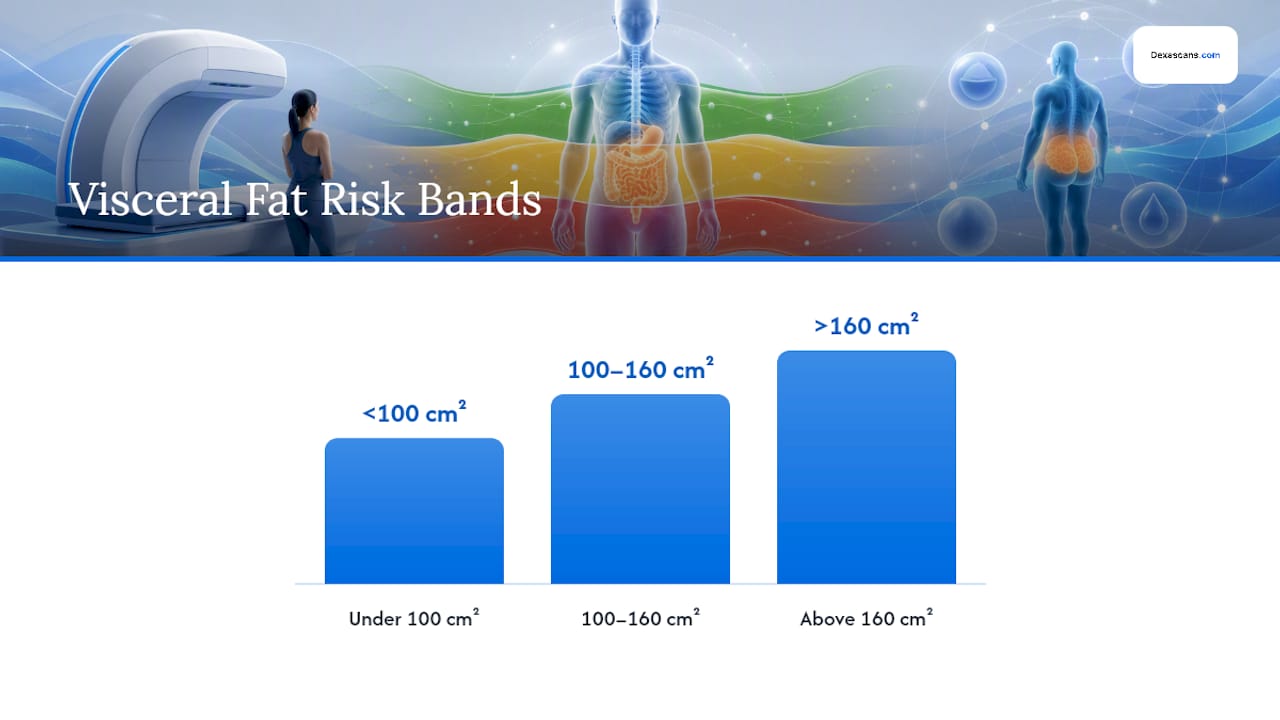
Clinical thresholds generally treat a visceral fat area under 100 square centimeters as lower risk, 100 to 160 square centimeters as increased risk, and above 160 square centimeters as high risk, based on thresholds used in whole-body densitometry assessment. These bands aren't universal law. They shift somewhat by sex, age, and population, and a visceral fat area that's borderline for one person's overall risk profile might matter more or less depending on blood pressure, blood sugar, and family history.
Visceral fat isn't just a passive storage depot, it behaves like an active endocrine tissue. Elevated levels are linked to insulin resistance, higher triglycerides, and increased blood pressure, the core components of metabolic syndrome. That's part of why clinicians who order or review visceral fat scans rarely look at the number in isolation. A visceral fat area of 130 square centimeters combined with normal fasting glucose and healthy cholesterol reads differently than the same number paired with elevated A1C. Expert commentary framing visceral fat as a distinct metabolic organ makes the case that anthropometrics alone can't substitute for that kind of layered, lab-informed interpretation.
What typically happens at each range:
- Under 100 cm²: Usually no additional testing triggered beyond standard annual labs.
- 100 to 160 cm²: Often prompts more frequent metabolic screening, blood pressure checks, and a closer look at diet and activity patterns.
- Above 160 cm²: Frequently leads to specialist referral, more comprehensive metabolic workup, and a structured intervention plan.
Statistic worth remembering: the jump from "increased risk" to "high risk" happens at 160 square centimeters, a threshold that shows up consistently across the clinical literature on VAT interpretation.
Realistic monitoring means picking one method, one scanning cadence, and sticking with it. Visceral fat doesn't move dramatically week to week, and chasing daily or weekly changes on any device, DEXA included, mostly just measures noise. A three to six month interval between scans gives lifestyle changes enough time to show a real, detectable shift.
How Do You Choose and Book the Right Visceral Fat Test?
Match the test to your actual goal. If a doctor already ordered abdominal CT or MRI for another reason, ask for the visceral fat measurement while you're in there, it's essentially free information layered onto a scan you're already getting. If you're starting from scratch and want ongoing monitoring, DEXA is usually the more sensible entry point over paying for standalone CT or MRI purely for visceral fat tracking.
Cash pricing for DEXA scans tends to run well below hospital imaging rates, since the equipment and scan time cost less than CT or MRI. Insurance rarely covers a visceral fat scan specifically, since it's typically considered elective rather than diagnostic, so cash pricing is worth comparing directly across clinics.
Getting tested, step by step:
- Decide your goal: one-time baseline versus ongoing tracking.
- Choose the method that fits: MRI or CT if already clinically indicated, DEXA for repeatable monitoring.
- Confirm the report includes a visceral fat area, not just total body fat percentage.
- Ask about prep requirements, most DEXA scans need no fasting, but confirm clothing and hydration guidance.
- Schedule your next scan for three to six months out to give any lifestyle change time to register.
Pro Tip: Before booking, ask the clinic directly whether their DEXA report includes a VAT area figure and a VAT to subcutaneous fat ratio. Not every scan package includes visceral fat by default, some only report total body fat percentage.
Why Dexascans Is Built Around DEXA for Visceral Fat Tracking
Dexascans lists more than 511 verified DEXA locations across 48 states, letting anyone search and book a scan without a physician referral. That matters for visceral fat specifically, since most people pursuing this test are self-directed, not responding to a doctor's order.
- Transparent cash pricing helps users compare clinics before booking.
- Reported DEXA precision of ±1 to 2% supports meaningful repeat testing, the exact use case anthropometrics and consumer BIA devices can't cover.
- Such platforms work well for people seeking a baseline and follow-up scan without hospital scheduling delays.
The Real Problem With How People Track Visceral Fat
Most advice on visceral fat treats measurement as an afterthought, something you check once and forget. That's backwards. The number on day one matters far less than whether you can trust the number on day ninety, and that's a measurement consistency problem, not a willpower problem.
The conventional wisdom oversells consumer devices and undersells DEXA. Smart scales get marketed as a visceral fat solution because they're cheap and instant, but the evidence on BIA accuracy says plainly that they're not built to isolate visceral fat from everything else sitting in your midsection. Meanwhile DEXA, which has genuine validation data behind it, gets treated as an afterthought reserved for bone density, when it's arguably the single best tool most people will ever have access to for tracking this specific number over time.
If you take one thing from this guide, make it consistency over precision-chasing. A person who gets an accessible, validated DEXA scan every four months will learn more about their real trajectory than someone who gets one perfect MRI and never checks again. Pick a method you'll actually repeat, and let the repetition do the work.
— Erik
Book a DEXA Scan Through Dexascans
Dexascans is the practical alternative to guessing your visceral fat status from a bathroom scale or waiting for a doctor to order an abdominal CT for an unrelated reason. Search by city or ZIP code, compare verified clinics and their cash prices side by side, and book directly, no referral, no waiting room runaround.
Start by checking DEXA scan locations near you to see which clinics offer visceral fat reporting as part of their body composition package. Before booking, confirm the clinic's scan includes a VAT area figure and VAT to subcutaneous fat ratio, not just an overall body fat percentage, since reporting formats vary by device and clinic. If you want more background first, the complete guide to what a DEXA scan measures walks through positioning, prep, and what your results will actually look like. For a broader look at what a full body composition scan includes beyond visceral fat, that page breaks down typical pricing and what to expect at your appointment. Once you've picked a clinic, booking usually takes just a few minutes online, and most locations can get you scanned within the week.
This article is general information, not a substitute for advice from a qualified doctor. Consult a qualified healthcare professional about your own circumstances before acting on anything here.
FAQ
Is 12% visceral fat high?
On DEXA or CT scales, a VAT area under 100 square centimeters is generally considered lower risk, while anything above 160 square centimeters is high risk.
How do I calculate my visceral fat?
You can't calculate visceral fat with a formula alone, it requires imaging. Waist circumference and waist-to-hip ratio give a rough screening estimate, but an actual VAT area figure comes only from a DEXA, CT, or MRI scan.
What reduces visceral fat quickly?
No method eliminates visceral fat overnight, but a consistent calorie deficit combined with regular aerobic exercise is the most evidence-supported approach for reducing visceral fat over a period of months, not days. Reliable tracking, ideally via repeat DEXA scans three to six months apart, is the only way to confirm whether an approach is actually working for you.
What are signs of high visceral fat?
An expanding waist circumference, particularly when it grows faster than overall body weight, is the most visible practical sign. Because visceral fat behaves like metabolically active tissue, high levels often show up alongside elevated blood pressure, high triglycerides, and insulin resistance on routine bloodwork, even in people who don't look overweight.
Is DEXA as accurate as CT for visceral fat?
DEXA isn't identical to CT, but validation studies show visceral fat area estimates from DEXA correlate with CT-derived measures at r² values around 0.95 to 0.96, a strong statistical agreement. For most people, that level of accuracy combined with lower radiation and lower cost makes DEXA the more practical choice for repeat visceral fat monitoring.