
A standalone RMR test typically runs $75 to $175 at most U.S. gyms and clinics, with academic labs and full clinical setups reaching $200 to $300+. Bundling it with a DEXA scan or VO2 max test pushes the all-in price higher, usually into the $150 to $300 range. Compare local cash prices through Dexascans before you book, since fees for the same test can swing by more than $100 across a single metro area.
TL;DR:
- RMR tests cost between $75 and $175 at gyms and clinics, but academic labs and bundled tests can reach $200 to $300 or more, with significant price variations across providers.
- The highest-priced tests at university labs and hospital centers include detailed interpretation, longer measurement times, and often bundle with body scans, unlike budget options with limited analysis.
- Equipment type, venue quality, added tests, and geographic location significantly influence the price, with higher costs typically linked to more precise methods and upscale facilities.
- Confirm whether the quoted price includes interpretation and if bundling with other tests is cheaper, as many clinics charge extra for follow-up calls or reports.
- Retesting every 3 to 6 months with consistent pre-test conditions yields more accurate insights, but most clinics classify RMR testing as wellness, so insurance coverage is unlikely.
Table of Contents
- RMR Test Cost Tiers: What You Get at Each Price Point
- What Drives the Price Up or Down
- Where to Book an RMR Test and How to Compare Providers
- Prepping for the Test and What Happens During It
- Is an RMR Test Worth Paying For?
- What I'd Check Before Booking
- Compare Cash Prices Before You Book
- Sources
RMR Test Cost Tiers: What You Get at Each Price Point
The price you pay varies based on the equipment, the technician's time, and whether interpretation is included. A lower-cost test at a commercial gym and a higher-priced test at a university lab differ significantly in these aspects, even if both provide a daily calories burned number.
Budget tier. This usually buys a short measurement using a handheld or portable metabolic analyzer, often at a gym or personal training studio. You typically receive a printout with your RMR number and perhaps a generic calorie range. Follow-up consultations or dietitian interpretation are uncommon in this tier.
Midrange tier. Expect a longer measurement window, a technician guiding pre-test preparation, and some explanation of the results regarding calorie targets. Some medical weight-loss clinics include RMR testing as part of existing visits.
High end ($175 to $300+). This tier covers university exercise science labs, hospital-affiliated performance centers, and RMR tests bundled with a DEXA scan or VO2 max assessment. One academic lab, the Human Performance Clinical Research Laboratory at Colorado State University, lists a $210 fee for its RMR assessment alone.
Before you book anywhere, confirm three things by phone or email:
- Does the quoted price include a written interpretation, or just raw numbers?
- Is there a separate facility fee or "new client" charge on top of the test?
- If you're combining tests, is the bundle price actually cheaper than booking each separately?
What Drives the Price Up or Down
Two clinics using the same brand of metabolic cart can still charge wildly different prices, and the gap usually comes down to four things.
- Equipment and method. Ventilated hood systems and full canopy setups tend to cost more to operate than a simple mouthpiece and nose clip mask, and that overhead shows up in the price.
- Venue type. Research labs with 30 to 45 minute measurement windows and higher-precision bench calorimeters generally charge more than a quick 10 minute test at a commercial gym.
- Add-ons. Pairing RMR with a DEXA body composition scan or a VO2 max test raises the total, and nutrition counseling on top of that adds another line item.
- Geography and facility fees. Clinics in major metro markets often charge a premium simply to cover rent, separate from anything about the test itself.
Pro Tip: Ask specifically whether the quoted price is "all-in" or whether interpretation and a follow-up call cost extra. Clinics rarely volunteer this unless you ask directly.
Where to Book an RMR Test and How to Compare Providers
Three provider types dominate the U.S. market: medical weight-loss clinics, university or hospital exercise physiology labs, and commercial fitness studios that added metabolic testing as a side service. Each prices differently, and none of them advertise consistently, so comparison shopping matters more here than for most health services.
- Confirm the all-in price before booking. Ask what's included: the measurement itself, a printed report, and whether a trained professional reviews the results with you.
- Ask about test length and included interpretation. A 10 minute test with no explanation is a different purchase than a 30 minute session with a follow-up consult, even at the same price point.
Prepping for the Test and What Happens During It
Getting an accurate number depends almost entirely on what you do in the 24 hours before your appointment. Clinical protocols call for fasting between approximately four and eight hours beforehand and avoiding caffeine, nicotine, and moderate to vigorous exercise for about 12 to 24 hours, according to Colorado State University's Human Performance Clinical Research Laboratory. Some protocol reviews push the fasting window even longer, recommending extended rest in a quiet, thermoneutral room before measurement.
The appointment itself usually takes 30 to 45 minutes total, though the actual measurement window is shorter. You'll lie down or recline in a chair while breathing through a ventilated hood, canopy, or mask connected to a metabolic cart that measures oxygen consumption and carbon dioxide output. A technician monitors the readout and watches for movement or restlessness, because mental stress or fidgeting can raise oxygen consumption enough to skew results.
- Arrive early so rushing doesn't spike your heart rate before the test starts.
- Wear comfortable clothing since you'll be reclined for 20 to 30 minutes.
- Close your eyes or focus on slow breathing if the technician suggests it.
- Skip the pre-appointment coffee, even decaf, if your clinic asks for a full stimulant-free window.
Is an RMR Test Worth Paying For?
An RMR test earns its cost when you've hit a weight-loss plateau, when you're training for a specific performance goal, or when you want a real number instead of a formula-based guess. Generic equations like Harris-Benedict or Mifflin-St Jeor estimate calorie needs from height, weight, age, and sex, but they can be off by hundreds of calories for anyone with above-average muscle mass or a slower metabolism. RMR testing replaces that guesswork with a measured caloric baseline that a dietitian or trainer can use to set your maintenance calories or your deficit target with more confidence.
- Retest every 3 to 6 months if you're actively losing weight or making major training changes, since RMR shifts as body composition changes.
- Keep pre-test conditions identical each time (same time of day, same fasting window) because consistency across repeat tests often matters more than the number from any single session.
- Confirm your insurance status before booking. Most clinics classify RMR testing as a wellness assessment rather than a covered medical service, which means you should plan to pay out-of-pocket.
What I'd Check Before Booking
Run through this before handing over a card: confirm the equipment type (hood or mask), get the all-in price in writing, ask whether interpretation is included or billed separately, and find out the clinic's retest pricing if you plan to track changes over time. The most common surprise isn't the base test price. It's the $30 to $50 "consultation" fee tacked on after the fact. Dexascans lists verified pricing across more than 511 locations in 48 states, which makes that comparison a lot faster than cold-calling clinics one by one.
— Erik
Compare Cash Prices Before You Book
Skip the round of phone calls to five different clinics just to find out what an RMR test actually costs near you. Some platforms offer verified U.S. locations with transparent cash pricing, so you can see what a clinic charges before you call, and book directly without needing a physician referral.
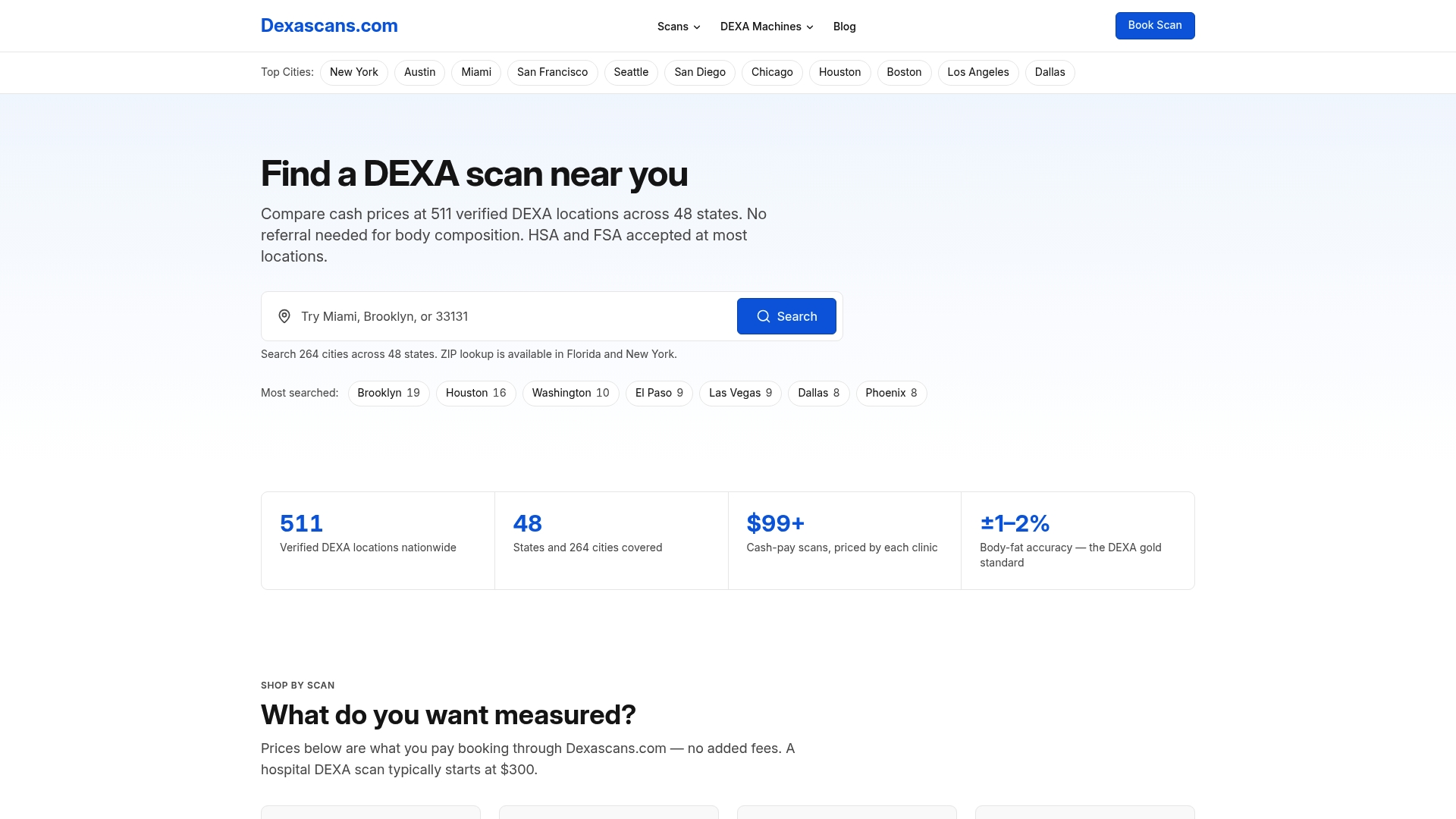
That transparency matters most when you're comparing a standalone RMR test against a bundled appointment. A DEXA and RMR combo might run $150 to $300 depending on the provider, and seeing that number upfront beats getting surprised by an add-on fee at checkout. If you're weighing whether to pair RMR with a body composition or bone density scan, the same platform lets you check bone density testing costs side by side. Search your ZIP code on the Dexascans locations page now and see which clinics near you post real cash prices instead of "call for pricing."
Sources
- Resting Metabolic Rate - Human Performance Clinical Research Laboratory
- Resting metabolic rate — The Ohio State University
- Resting metabolic rate instructions — UC Davis Sports Medicine