

DEXA scans are generally not recommended during pregnancy, and most imaging centers will postpone one if you tell them you're pregnant or think you might be. If a scan does happen before pregnancy is confirmed, the fetal radiation dose is typically very low, and the added cancer risk is small. Still, tell your provider right away, and don't schedule a nonurgent DEXA scan while pregnant unless your doctor decides it's clinically necessary.
TL;DR:
- Fetal DEXA scan exposure generally remains below 1 milligray, with an estimated cancer risk of about 0.1 to 0.5 per million, comparable to background radiation.
- Most clinics prioritize postponing nonurgent scans during pregnancy and will reschedule if pregnancy is suspected or confirmed, except in rare cases like severe fractures or urgent diagnoses.
- Reputable imaging centers confirm pregnancy status through questionnaires, pregnancy tests, or discussions about menstrual history, and will reschedule if pregnancy is likely.
- If a scan occurs during pregnancy, obtaining a dose estimate from the imaging center and consulting your obstetric provider can reassure you that risks are minimal.
- Alternative options like heel DEXA or ultrasound assessments are available but may not fully replace spine or hip scans needed for osteoporosis diagnosis.
Table of Contents
- Pregnancy DEXA Scan Safety: The Actual Radiation Numbers
- Why Doctors Postpone DEXA Scans During Pregnancy
- What Clinics Check Before a DEXA Scan
- What To Do If a DEXA Scan Happened During Pregnancy
- Safer Alternatives While You're Pregnant
- How To Think About This Data As A Patient
- Finding A DEXA Scan Once Your Provider Clears You
- Sources
- FAQ
Pregnancy DEXA Scan Safety: The Actual Radiation Numbers
DEXA machines use a fraction of the radiation dose of a standard X-ray, but "low" isn't the same as "zero," and pregnant patients deserve the actual figures instead of vague reassurance.
Research measuring embryo and fetus exposure during spine and femur DEXA scans found doses generally under 1 milligray (mGy), with the exact number shifting depending on which trimester the scan happens in and which body region gets imaged. Translated into cancer risk, that works out to an estimated excess fatal cancer risk of roughly 0.1 to 0.5 per million, a range that sounds abstract until you compare it to things people already accept as routine.
Here's what that dose looks like next to other common exposures:
- A pelvic X-ray delivers a dose, but measured DEXA fetal exposures came in hundreds to thousands of times lower than.
- Everyday background radiation in the U.S., the kind you absorb from soil, air travel, and cosmic rays, can rival or exceed a typical DEXA fetal dose over the course of a single day.
- The CDC confirms that DEXA uses very low radiation levels overall, though it still advises against the scan during pregnancy as a precaution.
None of this means the dose data is perfectly precise. Measurements vary by scanner model, positioning, and how much of the fetus overlaps the scan field, so researchers describe these figures as estimates within a range rather than a single fixed number. The uncertainty runs in the direction of "low and probably lower," not "low but possibly dangerous." That distinction is why guidance leans toward caution rather than alarm.
Why Doctors Postpone DEXA Scans During Pregnancy
The guiding principle in medical imaging is called justification: before any test involving radiation, the expected clinical benefit has to outweigh the risk, and that calculation shifts the moment a patient is or might be pregnant. The IAEA's guidance on DXA and pregnancy recommends confirming pregnancy status before any scan and deferring nonurgent bone density exams until after delivery.
Deferral is the default, not a suggestion reserved for cautious clinics. A handful of scenarios might still justify imaging:
- A patient with a suspected fracture or severe bone disease where treatment decisions can't reasonably wait.
- A case where the referring physician determines that the diagnostic information changes immediate management, and no lower-exposure alternative will answer the question.
- Situations flagged by a radiologist or medical physicist as low enough risk to proceed, with documented reasoning.
These exceptions are rare in practice, and most clinics will look for any reasonable way to wait rather than proceed.
Pro Tip: If the fetus overlaps the area being scanned, positioning alone can affect dose accuracy, which is one more reason technologists prefer to reschedule rather than try to work around the anatomy.
What Clinics Check Before a DEXA Scan
Reputable imaging centers don't rely on guesswork to confirm pregnancy status. Most follow a version of this process:
- A screening questionnaire. You'll typically be asked directly whether you're pregnant or could be pregnant, sometimes as part of routine intake paperwork.
- A urine or serum pregnancy test, when your answer is uncertain or when clinic policy requires it for anyone of childbearing age.
- A conversation about your last menstrual period and any symptoms that might suggest early pregnancy, since a home test can return a false negative in very early weeks.
- Documentation and rescheduling, if pregnancy is confirmed or suspected, with your scan moved to a postpartum date instead of canceled outright.
You don't have to wait to be asked. If there's any chance you're pregnant, say so before the appointment, not after you're on the table. It's a two-minute phone call that avoids an unnecessary conversation later.
What To Do If a DEXA Scan Happened During Pregnancy
Finding out about a pregnancy after a scan already happened is more common than people assume, since many pregnancies aren't confirmed until several weeks in. If this happened to you, take a few concrete steps rather than spiraling into worst-case searches online.
- Call your obstetric provider first and mention the scan, the approximate date, and which body part was imaged.
- Request a documented dose estimate from the imaging center. Technologists can often reconstruct the likely fetal dose using the machine's settings and scan geometry, even after the fact.
- Expect reassurance, not alarm, in most consultations, because typical DEXA doses fall far below the exposure levels linked to developmental risk, which MotherToBaby places in the hundreds of millisieverts range, orders of magnitude above a routine DEXA exam.
- Ask for a referral to a radiologist or medical physicist if you want an individualized dose calculation rather than a general estimate.
The goal of this conversation isn't to dismiss your concern. It's to replace uncertainty with an actual number specific to your scan.
Safer Alternatives While You're Pregnant
If bone density information is genuinely needed during pregnancy, a full spine or hip DEXA isn't the only option on the table. A few alternatives carry lower exposure or none at all:
- Postponing until after delivery remains the simplest and most reliable choice when the scan isn't urgent.
- Peripheral or heel DEXA, which the IAEA lists as a lower-exposure option when some bone density information is needed sooner, though it measures a different skeletal site and may not answer the same clinical question as a spine or hip scan.
- Ultrasound-based bone assessments, which avoid ionizing radiation entirely but provide less standardized data than DEXA and aren't a direct substitute for diagnosing osteoporosis.
One caution worth stating plainly: a lead apron isn't a workaround. Shielding has limited effect on fetal dose during DEXA because much of the exposure comes from radiation scattering inside the body rather than from a direct beam an apron could block. Deferral, not a shield, is the actual safety measure.
Pro Tip: If your provider suggests a heel DEXA as a stopgap, ask what specific question it's answering. It's useful for some screening purposes but doesn't replace a hip or spine scan if fracture risk at those sites is the real concern.
How To Think About This Data As A Patient
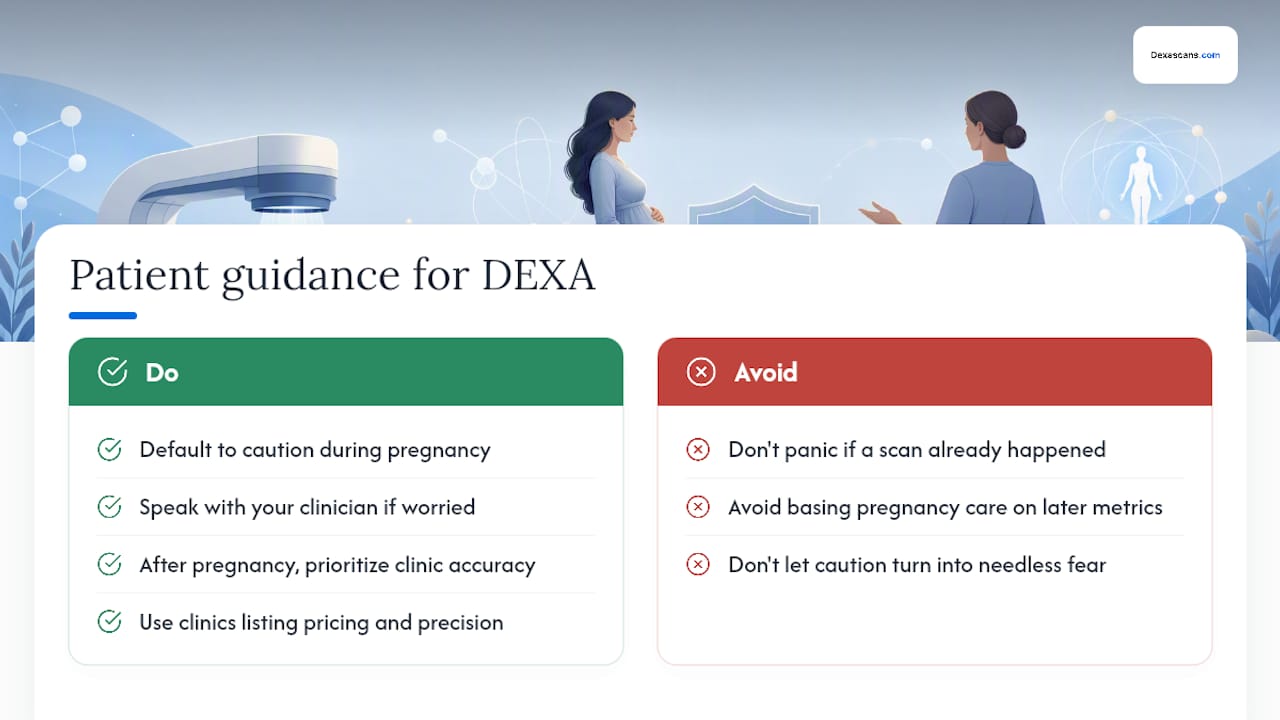
The evidence here points to one consistent message: default to caution, but don't let caution curdle into unnecessary fear if a scan already happened. The dose numbers from dual X-ray absorptiometry studies are reassuring specifically because they're small relative to thresholds that actually matter for fetal development.
Once you're past pregnancy and cleared for imaging again, accuracy and transparency become the priorities. Dexascans lists verified DEXA scan locations with published cash pricing and body composition precision within ±1 to 2%, useful context for choosing a clinic later, though none of that applies to decisions made during pregnancy itself.
— Erik
Finding A DEXA Scan Once Your Provider Clears You
Once your care team gives you the green light, postpartum, or well before your next pregnancy, the challenge shifts from "should I get this scan" to "where do I get it without overpaying." There are nationwide directories built for exactly that stage: offering listings of verified locations across many states where you can compare cash prices and book directly, without waiting on a physician referral.
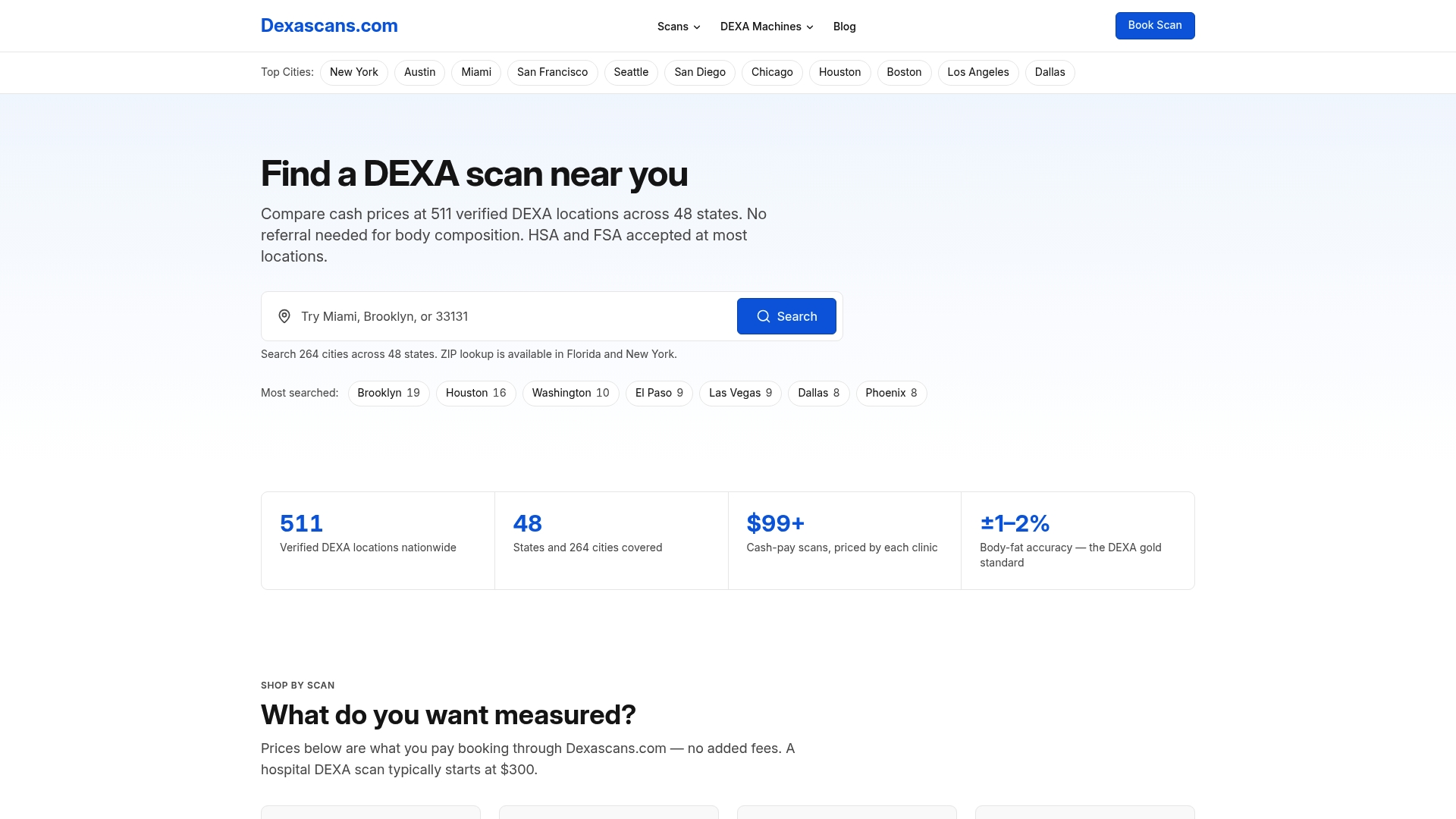
Hospital-based DEXA pricing varies widely and often comes with billing surprises. Some platforms list transparent cash rates upfront, allowing comparison of nearby clinics before committing. Start by searching your ZIP code for nearby DEXA scan locations, then confirm with the clinic directly which scan type you need, whether that's a straightforward bone density test or a full body composition scan, and ask them to walk you through their safety screening protocol before you book.
This article is general information, not a substitute for advice from a qualified doctor. Consult a qualified healthcare professional about your own circumstances before acting on anything here.
Sources
- Embryo/fetus radiation dose and risk from dual X-ray absorptiometry examinations - PubMed
- Radiation protection of pregnant women during DXA | International Atomic Energy Agency
- Facts About Bone Density (DEXA Scan) | Radiation and Your Health | CDC
FAQ
Is it safe to get a DEXA scan while pregnant?
DEXA scans are generally avoided during pregnancy as a precaution, even though measured fetal doses tend to be very low. Tell your provider if you're pregnant or think you might be, and expect the scan to be rescheduled unless there's an urgent clinical reason to proceed.
Can you get a DEXA scan while on your period?
Yes, a menstrual period doesn't affect DEXA scan results or safety, and clinics don't require you to reschedule around it. The screening question that actually matters is pregnancy status, not cycle timing.
What should I do if I had a DEXA scan before I knew I was pregnant?
Contact your obstetric provider and mention the date and type of scan, then ask the imaging center for a documented dose estimate. Typical DEXA doses fall well below the exposure levels associated with developmental risk, so most consultations end in reassurance rather than concern.
Is a heel DEXA scan a safe alternative during pregnancy?
Peripheral or heel DEXA carries lower radiation exposure and is sometimes considered when bone information is needed during pregnancy. It measures a different skeletal site than a spine or hip scan, so it may not fully answer the same clinical question your provider is asking.
How do I find an affordable DEXA scan after pregnancy?
Once your provider clears you for imaging, Dexascans lets you compare verified clinics by ZIP code with transparent cash pricing and no referral required. Current pricing is listed directly on each clinic's page on the site.