

Medicare and most private insurers cover DEXA bone density scans when a doctor documents medical necessity, meaning a qualifying risk factor like osteoporosis screening age, long-term steroid use, or fracture history. Elective scans booked purely for fitness tracking or body composition curiosity are almost never reimbursed. Without coverage, expect to pay cash, typically in the low hundreds of dollars depending on the clinic.
TL;DR:
- Medicare and private insurers typically cover DEXA scans only when ordered for specific medical reasons like osteoporosis risk or fracture monitoring, not for fitness or body composition purposes.
- Coverage is generally limited to one test every 24 months, but more frequent scans are allowed if supported by medical necessity, such as starting long-term steroid therapy.
- Private plans often depend on proper prior authorization, correct coding, and documented risk factors, with denials most common for incorrect billing or exceeding frequency limits.
- Without insurance, cash prices for a DEXA scan can range from $50 to $250, with dedicated clinics usually offering more transparent and lower fees than hospitals.
- Verifying coverage rules through official sources and comparing verified clinic prices beforehand can save money and avoid surprise bills.
Table of Contents
- How insurers decide: medically necessary vs. elective
- Medicare bone density coverage: who qualifies and how often
- Private insurance: prior authorization, coding, and appeals
- What a DEXA scan costs without insurance
- Finding lower-cost, verified DEXA scan locations
- What to do next if you need a DEXA scan
- Book a Verified, Transparently Priced DEXA Scan
- Where to Verify Coverage Rules Yourself
- Sources
- FAQ
How insurers decide: medically necessary vs. elective
Insurance carriers, including Medicare, apply a standard called "reasonable and necessary" before they pay for a DEXA scan. That phrase does the heavy lifting in every coverage decision. It means the test has to be tied to an actual clinical question, such as confirming osteoporosis, checking whether a medication is preserving bone mass, or investigating an unexplained fracture. A scan ordered because someone wants to track muscle gain for a workout program doesn't meet that bar.
Two procedural rules sit underneath that standard:
- The scan must be ordered by a treating physician or qualified nonphysician practitioner, not requested directly by the patient walking in off the street.
- A physician has to interpret the results as part of the patient's medical record, not just hand over a printout.
A woman in her late 50s whose doctor suspects osteoporosis after a wrist fracture clears the medical necessity bar easily. An athlete who wants quarterly body fat percentages for training purposes does not, even though both people are getting scanned on the exact same machine.
Medicare bone density coverage: who qualifies and how often
Medicare Part B covers bone mass measurements for beneficiaries who fall into specific clinical categories, and Medicare spells out the payment terms clearly: you pay nothing if your provider accepts assignment. That single detail surprises a lot of people who assume Medicare bone density coverage comes with a copay attached.
The federal rule governing all of this, 42 CFR §410.31, lists five beneficiary categories eligible for coverage:
- Estrogen-deficient women determined by their physician to be at clinical risk of osteoporosis.
- Individuals with vertebral abnormalities found on X-ray suggesting osteoporosis, osteopenia, or vertebral fracture.
- People receiving long-term glucocorticoid (steroid) therapy equivalent to 5 mg or more of prednisone daily for extended periods.
- Individuals with primary hyperparathyroidism.
- Patients being monitored to assess response to an FDA-approved osteoporosis drug therapy.
Medicare pays for one bone mass measurement every 24 months for qualifying beneficiaries, and the Bone Mass Measurement LCD allows more frequent testing when a physician documents a medical need, such as confirming a baseline before starting steroid therapy.
The 24-month rule isn't as rigid as people assume. If a patient starts a new course of long-term steroids, or a physician needs a confirmatory baseline measurement before adjusting drug therapy, Medicare permits testing sooner than the standard 23-month interval. Billing also has to reflect an FDA-cleared DXA device measuring the axial skeleton, meaning hip and spine, not a peripheral heel scanner at a health fair.
Private insurance: prior authorization, coding, and appeals
Private plans generally borrow Medicare's medical necessity framework, but the details shift from insurer to insurer and even from plan to plan within the same company. Some set a lower qualifying age for screening. Some rely on fracture risk calculators. A few require a documented family history of osteoporosis before they'll approve a scan for someone under 65. The only way to know your specific plan's threshold is to pull its medical policy document, not to assume it matches what a friend's plan covered.
Denials tend to cluster around two causes: the claim gets coded with a wellness or screening code instead of a diagnostic one, or the scan falls outside the plan's frequency limit without a documented exception. Getting ahead of both issues takes a few concrete steps:
- Ask your provider's billing office to request prior authorization before the scan, not after.
- Have your physician document the specific risk factor driving the order, such as a fracture, steroid prescription, or lab-confirmed hyperparathyroidism, using accurate ICD-10 coding.
- Get the plan's coverage criteria in writing so you know exactly what documentation satisfies it.
- If denied, file an appeal that includes your physician's notes explaining how the result will change your treatment plan.
Pro Tip: Denials get overturned far more often when the appeal ties the scan directly to a treatment decision, like starting or adjusting osteoporosis medication, rather than describing it as general monitoring.
What a DEXA scan costs without insurance
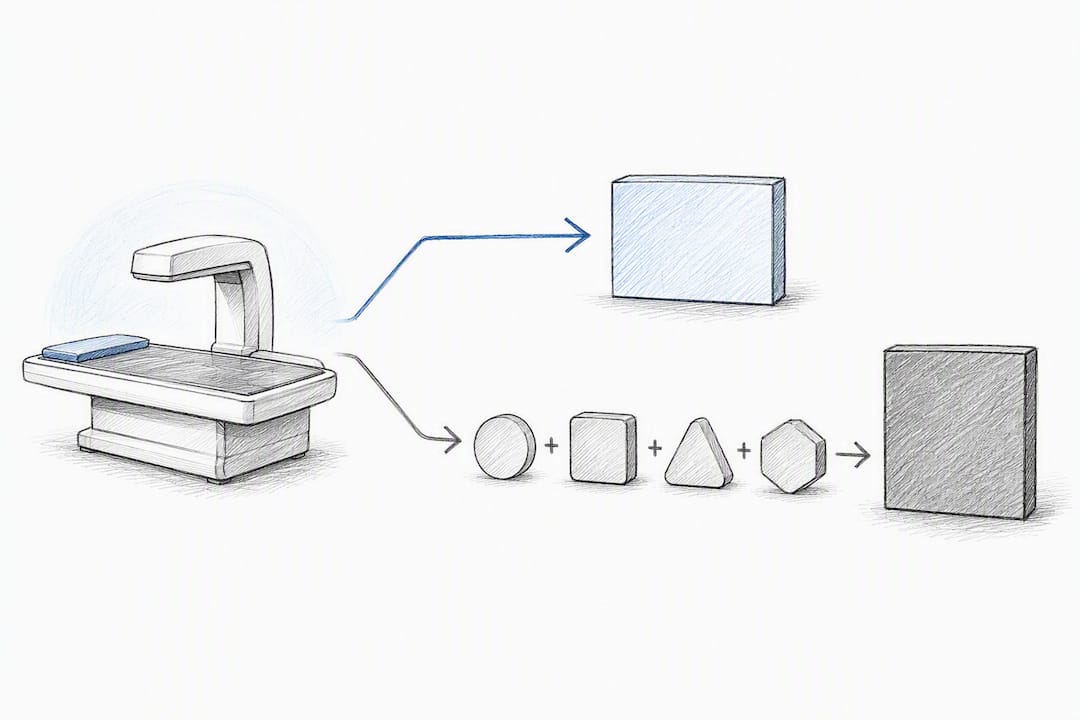
When coverage falls through, cash pricing for a bone density DEXA scan typically lands in the range of roughly $50 to $250 depending on the facility, though hospital imaging departments routinely charge several times that because of facility overhead and separate billing for the radiologist's interpretation. A dedicated imaging clinic or wellness center usually prices the whole visit as one transparent fee.
A few things worth checking before you book:
- Ask whether the quoted price includes physician interpretation or bills it separately.
- Confirm whether the clinic accepts Medicare assignment if you're on Medicare and hoping for coverage.
- Request an itemized receipt if you're planning to submit the expense to an HSA or FSA.
- If your insurer denies the claim, paying cash upfront is often cheaper than fighting for partial reimbursement on a scan billed at hospital rates.
Finding lower-cost, verified DEXA scan locations
Comparing cash prices before you book saves real money, and that's the gap Dexascans fills. The platform lists over 511 verified DEXA locations across 48 states, each with transparent cash pricing instead of the opaque hospital billing that catches so many patients off guard.
- Search by city or ZIP code to see nearby clinics offering axial DXA, the hip and spine technology Medicare requires for monitoring.
- Compare listed cash prices side by side before calling to ask about assignment acceptance.
- Choose a dedicated imaging or wellness clinic over a hospital radiology department when you're paying out of pocket, since facility fees at hospitals routinely exceed clinic pricing for the identical scan.
What to do next if you need a DEXA scan
If you think you need a bone density scan, start by asking your physician to document the specific risk factor driving the order, whether that's steroid use, a fracture, or hyperparathyroidism. Call your plan to confirm its frequency rules and prior authorization process before scheduling. Save every piece of documentation your doctor generates, since that paperwork becomes your strongest asset if a claim gets denied and you need to appeal.
— Erik
Book a Verified, Transparently Priced DEXA Scan
A platform like Dexascans helps avoid unexpected hospital billing for bone density scans. Instead of calling around or discovering a surprise facility fee after the fact, you compare real cash prices across verified clinics in your area before you ever pick up the phone.
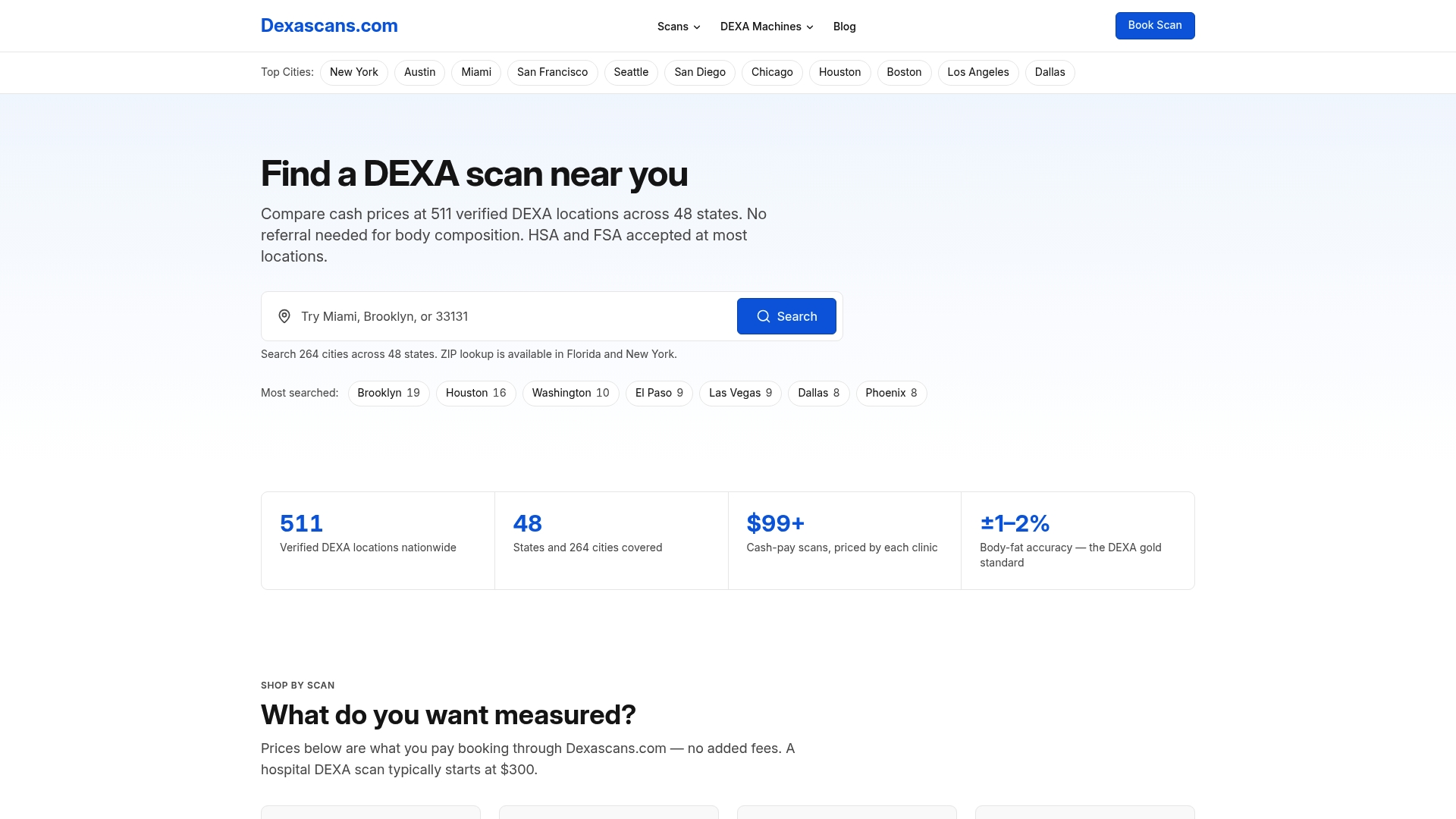
Patients can use online platforms to check which local clinics accept assignment to reduce out-of-pocket costs if their insurance has approved the scan. If you're paying cash, whether because your scan was denied or because you want a body composition scan that insurance doesn't cover in the first place, you'll see the price upfront instead of after the invoice arrives. Patients can search by ZIP code, compare options, and book directly with clinics that meet their needs and budget.
Where to Verify Coverage Rules Yourself
- Medicare confirms eligibility categories and payment terms directly from the source.
- 42 CFR §410.31 is the federal regulation behind every Medicare bone density decision.
- NIAMS explains the clinical reasoning behind osteoporosis screening for readers who want the medical background.
This article is general information, not a substitute for advice from a qualified doctor. Consult a qualified healthcare professional about your own circumstances before acting on anything here.
Sources
- Bone mass measurements
- 42 CFR § 410.31 - Bone mass measurement: Conditions for coverage and frequency standards
- LCD - Bone Mass Measurement (L36460)
FAQ
Can a DEXA scan be covered by insurance?
Yes. Medicare Part B and most private insurance plans cover DEXA bone density scans when a physician documents medical necessity, such as osteoporosis risk, long-term steroid use, or monitoring drug therapy. Coverage rules and frequency limits vary by plan, so checking your specific policy before scheduling avoids surprise bills.
How much does a DEXA scan cost without insurance?
Cash prices for a bone density DEXA scan typically fall in the range of roughly $50 to $250 at a dedicated imaging or wellness clinic, though hospital radiology departments often charge considerably more due to separate facility and interpretation fees. Comparing verified clinic pricing before booking is the most reliable way to avoid overpaying.
What diagnosis qualifies for insurance to cover a DEXA scan?
Qualifying diagnoses generally include estrogen deficiency with clinical osteoporosis risk, vertebral abnormalities on X-ray, long-term glucocorticoid therapy, primary hyperparathyroidism, and monitoring an existing osteoporosis drug regimen. These categories come directly from the CMS Local Coverage Determination governing bone mass measurement.
Will private insurance, including UnitedHealthcare, cover a DEXA scan?
Most private insurers, including UnitedHealthcare, cover DEXA scans under the same medical necessity framework Medicare uses, though specific age thresholds and prior authorization requirements vary by plan. Always confirm your exact plan's medical policy and secure prior authorization before scheduling to avoid a denial based on coding or frequency limits.
How often will Medicare pay for a bone density test?
Medicare generally covers one bone mass measurement every 24 months for eligible beneficiaries, though federal regulation allows more frequent testing when a physician documents a specific medical need, like a confirmatory baseline before starting steroid therapy. You pay nothing for the covered test if your provider accepts Medicare assignment.