
Expect to pay $40 to $150 out of pocket at a wellness studio or mobile clinic, and $150 to $400 or more at a hospital imaging department, for a single DEXA body composition scan. Insurance rarely covers it because insurers treat body composition tracking as elective. Your best move is comparing cash prices by ZIP code before you book, since the range between providers in the same city can vary widely.
TL;DR:
- DEXA scans typically cost between $40 and $150 at wellness clinics, while hospitals may charge $150 to $400 or more, with no insurance coverage expected.
- Facility type influences price variability, with hospitals charging more due to overhead, and add-ons like RMR or VO2 max tests increasing the total cost.
- Insurance covers bone density scans for medical purposes like osteoporosis, but body composition scans are usually considered elective and paid out of pocket.
- Using HSA or FSA funds is possible if the scan is medically necessary, but it requires proper documentation and billing codes from the provider.
- Comparing prices through verified platforms prior to booking ensures accurate costs, as local prices within the same metro area can vary significantly.
Table of Contents
- Body Composition Scan Cost by Facility Type and Add-Ons
- Does Insurance, Medicare, or HSA/FSA Cover a DEXA Scan?
- Where to Book a DEXA Scan and How to Compare Prices
- What a DEXA Scan Actually Measures, and How Accurate It Is
- How to Lower Your Out-of-Pocket Cost for a Scan
- Dexascans.com's Take on Pricing Transparency and Accuracy
- When Is a DEXA Scan Actually Worth the Money?
- Compare Verified DEXA Providers Before You Book
- Sources
Body Composition Scan Cost by Facility Type and Add-Ons
The price gap between providers is not random. It tracks overhead. A hospital radiology department carries the cost of full-time staff, imaging suites, and billing departments, so a bone density or body composition scan there often runs a higher amount before insurance. A wellness studio or a mobile DEXA van running the same GE Lunar or Hologic machine has none of that overhead, which is why storefronts and fitness-focused clinics typically land in the $40 to $150 range, and some membership-based providers advertise scans for as little as $39.95 when you commit to a package.
Facility type explains most of the spread, but add-ons stack on top of the base scan:
- Resting metabolic rate (RMR) testing: usually adds $30 to $75 to a bundled visit.
- VO2 max testing: often $50 to $100 extra, sometimes sold as a separate appointment.
- Detailed or trainer-friendly reports: some clinics charge $10 to $25 for an expanded printout with visceral fat trends and regional lean mass breakdowns.
- Combined body composition plus bone density appointment: typically cheaper per scan than booking two separate visits.
Geography matters almost as much as facility type. Dense metro markets like Miami, Los Angeles, and New York tend to have more competition among wellness studios, which pushes cash prices down toward the lower end of the band. Rural areas often have only a hospital or a single imaging center offering DEXA, so residents there are more likely to pay closer to the $300 to $400 mark simply because there is no cheaper alternative nearby.
Does Insurance, Medicare, or HSA/FSA Cover a DEXA Scan?
Insurance coverage depends entirely on why the scan is ordered, not what it measures. Insurers routinely classify a body composition scan (the kind fitness enthusiasts and athletes get for tracking fat and muscle) as elective and not medically necessary, which means you pay cash. A bone density scan ordered to diagnose or monitor osteoporosis is a different story. Medicare and most private insurers will often cover it when a physician orders it for a documented clinical reason, though Medicare typically requires that physician order and a qualifying risk factor on file.
Coverage odds hinge on intent, not the machine. The same equipment produces both reports, but an osteoporosis-screening order gets treated as diagnostic while a fitness-tracking request gets treated as elective, according to legal and insurance analysis of DEXA claims.
If you have an HSA or FSA, you can generally use those funds for a self-pay scan as long as it qualifies as a medical expense under CMS guidance on health savings accounts. Before you book, ask the clinic for:
- The CPT code used for billing.
- An itemized receipt separating the scan from any add-ons.
- Medical necessity documentation, if you plan to submit a claim.
Where to Book a DEXA Scan and How to Compare Prices
You have three real options for where to get scanned, and each comes with a different price and paperwork trade off. Wellness studios and mobile clinics are built for walk-in fitness clients, with fast bookings and no referral needed. Standalone imaging centers sit in the middle, often doing both diagnostic and elective scans with more clinical documentation than a gym-style studio. Hospital radiology departments charge the most and usually require a physician order, but they carry full clinical billing infrastructure if you need something submitted to insurance.
Before you hand over a credit card, verify a few things so you're comparing apples to apples:
- Confirm the scan is a full-body composition DEXA, not a partial or spot scan.
- Ask whether they can show a sample report so you know what metrics you're actually getting.
- Ask what machine or model they use, if listed, since older units can have longer scan times.
- Confirm the technician's credentials, especially at non-hospital locations.
- Ask directly: "Is there anything beyond the base price I should expect on the bill?"
Pro Tip: Call and ask for the total price including any facility fee before you book. Some hospital-affiliated imaging centers add a separate facility charge that never shows up on their advertised per-scan price.
Searching by city or ZIP on a comparison marketplace like Dexascans' locations directory saves you the trouble of cold-calling five clinics to get five different quotes.
What a DEXA Scan Actually Measures, and How Accurate It Is
A DEXA body composition report gives you four numbers that matter most: total body fat percentage, regional lean mass (arms, legs, trunk), an estimate of visceral fat, and, when bundled with a bone scan, bone mineral density (BMD). That's a meaningfully deeper picture than a bathroom scale or a tape measure gives you.
On accuracy, DEXA is treated as a reference-standard method in body composition research, with precision typically cited around ±1 to 2% for body fat measurement. That precision only holds if you control the variables that skew results, like hydration level, recent exercise, and time of day, since those can shift readings enough to mask a real change. A useful rule: don't chase week-to-week swings. Look for changes of a couple percentage points in body fat over 8 to 12 weeks before you treat it as a real trend rather than noise.
How to Lower Your Out-of-Pocket Cost for a Scan
The single biggest lever is buying more than one scan at once. Providers that sell multi-scan packs or monthly memberships routinely bring the per-scan price down well below a one-off hospital visit, and some retail chains use promotional or subscription pricing to make repeat testing affordable for people tracking progress over months.
A few other tactics worth trying:
- Check local universities and research hospitals for studies recruiting volunteers, which sometimes offer free or reduced-cost scans.
- Use HSA/FSA dollars and request an itemized receipt with the CPT code in case you need it for reimbursement.
- Ask a cash price directly. Clinics that quote insurance rates by default sometimes have a lower self-pay rate they won't volunteer unless asked.
- Watch for seasonal promotions around January and summer, when fitness-focused clinics run discounts to catch new-year and beach-season demand.
Dexascans.com's Take on Pricing Transparency and Accuracy
There are platforms listing many verified DEXA locations across multiple states, built specifically so you can compare cash pricing before you book instead of discovering the number on-site.
The platform's core function is straightforward: search by city or ZIP, see sample reports so you know what you're getting, compare clinic prices side by side, and book directly without needing a physician referral first. Because every listed clinic uses equipment reporting the industry-standard ±1 to 2% body fat precision, you're comparing real apples to apples, not a vague promise from a gym flyer. Location pages, like the Miami market comparisons, show how much per-scan pricing can shift within a single city.
When Is a DEXA Scan Actually Worth the Money?
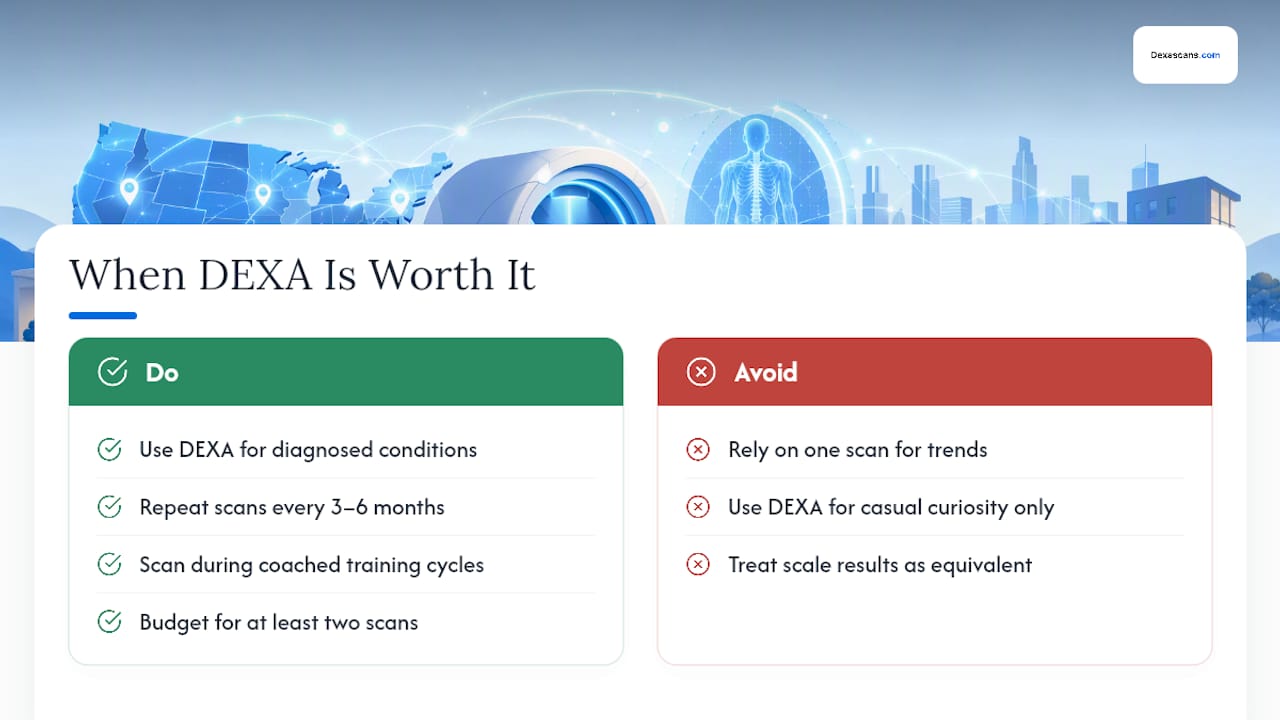
If you're managing a diagnosed condition, like osteoporosis risk or a known metabolic issue, a DEXA scan earns its cost through the clinical detail it provides that a scale never will. For general fitness tracking, the calculus is different. A single scan tells you almost nothing useful. The value shows up when you scan every 3 to 6 months and watch the trend in lean mass and visceral fat, not the absolute number from one visit.
People who get the most out of repeat DEXA testing tend to be those in a structured training block, cutting or bulking with a coach, or managing a health condition where body composition change matters clinically. If you're just curious, one scan will satisfy that. If you're actually trying to change your body, budget for at least two scans spaced months apart.
— Erik
Compare Verified DEXA Providers Before You Book
Cash pricing for the same scan can vary by more than $100 within the same metro area, and the only way to know you're not overpaying is to check before you commit.
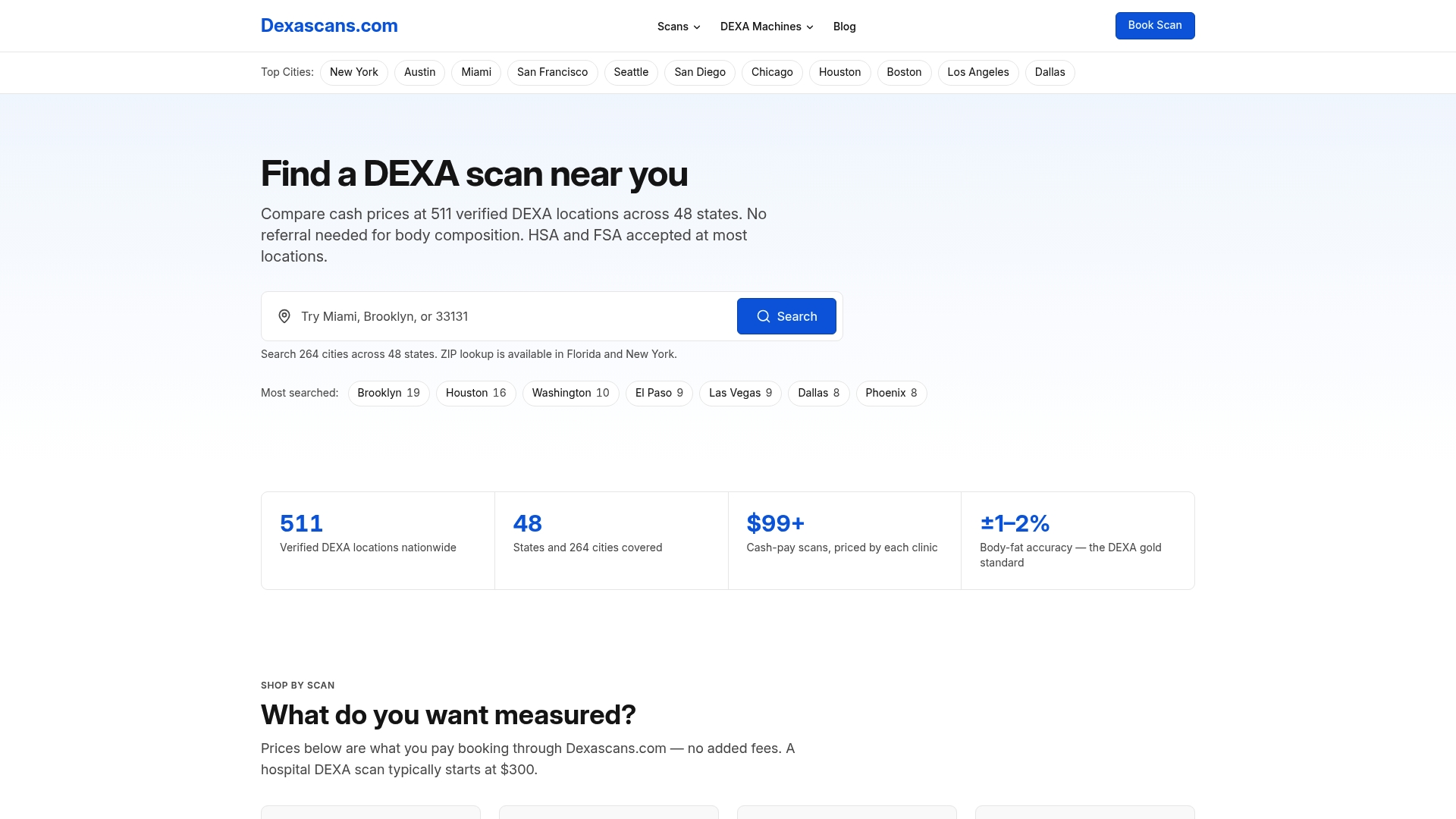 Some platforms offer to close that gap: search by city or ZIP, compare verified clinic pricing side by side, review sample reports, and book directly with no physician referral required. These platforms cover many locations across multiple states, so whether you're near a big metro or a smaller market, you can usually find more than one option to compare rather than taking the first quote you get. Start by browsing DEXA scan locations near you to see actual cash prices in your area before you book.
Sources
For coverage rules, review Medicare and ACA guidance on DEXA claims and CMS's HSA guidance. For accuracy, see the peer-reviewed body composition literature. For booking and pricing, use Dexascans' body composition scan page.
This article is general information, not a substitute for advice from a qualified doctor. Consult a qualified healthcare professional about your own circumstances before acting on anything here.
- DEXA Scan Cost: 2026 Pricing With and Without Insurance
- Does insurance cover a DEXA scan? Medicare, ACA and denials
- Peer-reviewed article on body composition assessment methods
- Health savings account (HSA) guidance (CMS resource)